
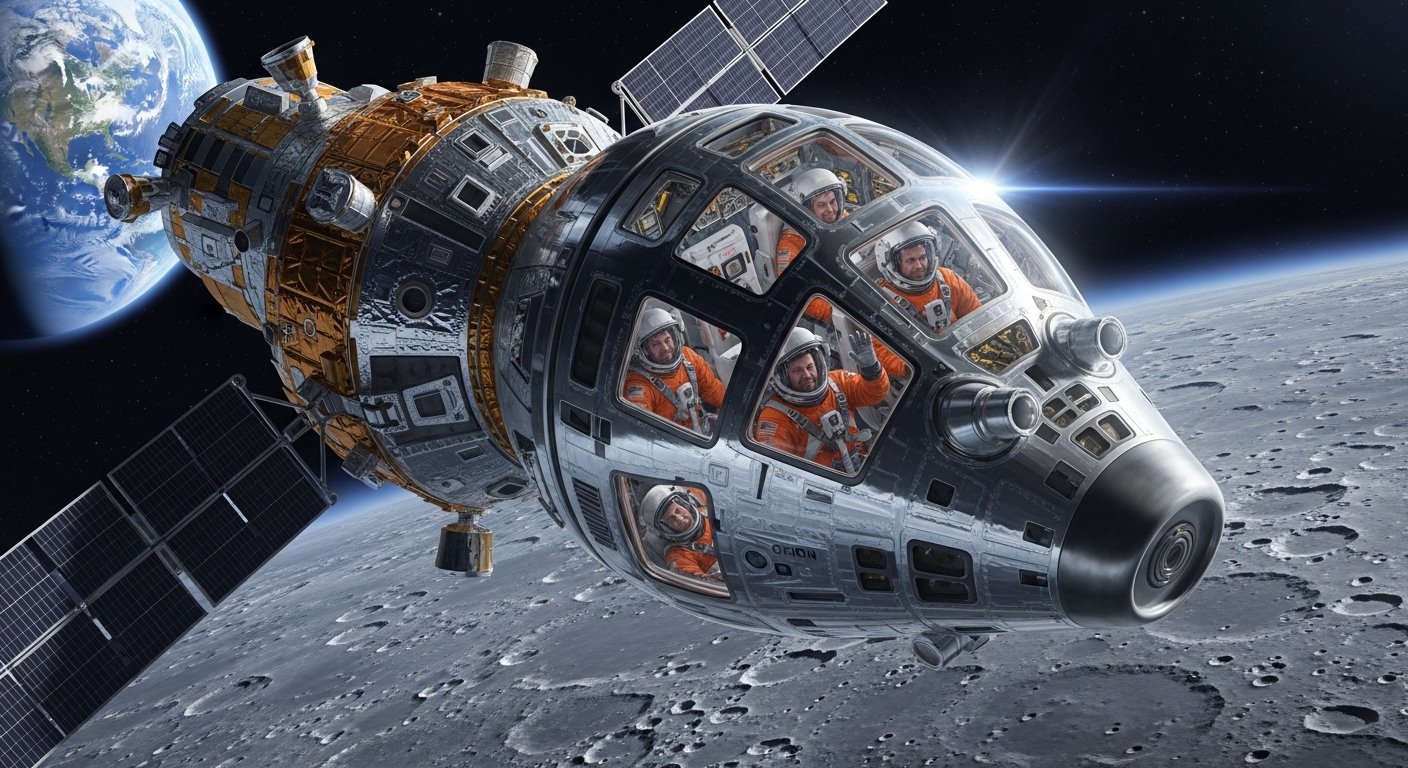
The mission Artemis 2 represents a giant and exciting step towards space exploration. In 2026, four astronauts will embark on a historic journey. They will circle the moon, testing systems crucial to the future. This manned test flight is critical to the Artemis program.
NASA is in the advanced stage of preparations for this unprecedented feat. This human return to lunar orbit is a significant milestone. He prepares the ground for mankind to tread again on the lunar surface.
The Artemis Mission 2: A Giant Jump For Mankind
A Artemis 2 It's the first manned mission of NASA's Artemis program. Its main objective is to test the life support systems of the Orion spacecraft. The crew will travel on a free return trajectory around the moon.
This flight without lunar landing will last about ten days. It will demonstrate the ability of Orion and rocket SLS. The mission is vital to ensuring the safety of future astronauts.
The success of Artemis 2 is a prerequisite for lunar landing missions. A Artemis 3For example, it will take astronauts to the surface of the moon. The learning of this mission is invaluable for long-term exploration.
NASA experts say this mission validates new technologies. It also expands our understanding of long-term space travel. It's an exciting moment for all mankind.
The Innovative Crew: Names That Will Make History
A Artemis 2 He'll take a historical crew into space. For the first time, a woman and a black astronaut will be part of a lunar mission. The diversity of this team reflects the inclusive spirit of exploration.

This crew represents the best of mankind. They were selected by their exceptional experience and abilities. Your training has been rigorous and comprehensive.
They will test all Orion capsule systems in a real environment. Each member has a crucial role to play. Cooperation between them is essential for success.
This team inspires a new generation of explorers and scientists. Your flight shows that space is for everyone. The mission marks a new chapter in space history.
The Four Chosen for the Lunar Orbit
The crew of Artemis 2 It consists of four highly qualified astronauts. They are Reid Wiseman, Victor Glover, Christina Koch and Jeremy Hansen. Each brings a vast experience to the mission.
Reid Wiseman will be the mission commander. Victor Glover will be acting as an Orion pilot. Christina Koch and Jeremy Hansen will be mission specialists. Jeremy Hansen is the first Canadian to participate in a lunar mission.
Christina Koch, for example, holds the record of continuous space flight for a woman. Victor Glover is a mission veteran on the International Space Station. These astronauts are real pioneers. They're ready for the lunar orbit challenge. To know more on the crew, visit the Artemis II astronauts.
Tip Technology: What Will Take Artemis 2 to Space
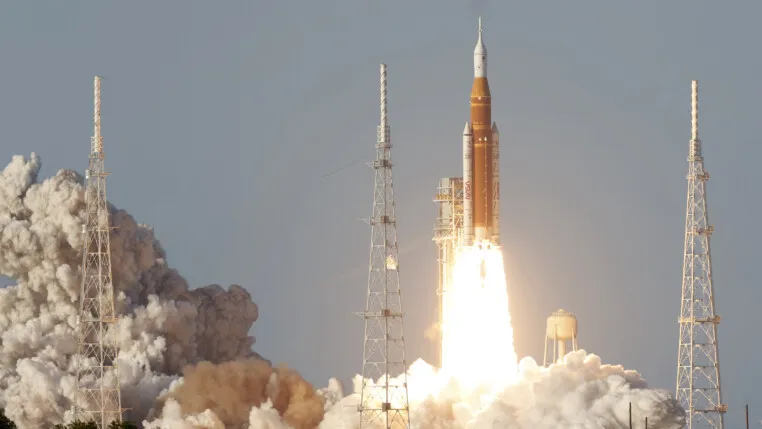
Two main components will boost the Artemis 2: the Space Launch System (SLS) rocket and the Orion spacecraft. The SLS is the most powerful rocket in the world. It was designed to carry heavy loads into deep space.
The Orion capsule will be the home of the crew during the journey. It is equipped with advanced life support systems. Orion can support astronauts for long periods in space.
The SLS has already demonstrated its ability in the unmanned flight of Artemis 1. This test was essential to validate the rocket performance. Now it's time to take humans.
Orion technology includes robust thermal shields and state-of-the-art communication systems. These elements are crucial to the safety of the crew. They guarantee protection against the extreme conditions of space.
Current Timetable and Preparations: Heading 2026.
The mission Artemis 2 It is firmly scheduled for 2026. NASA teams work tirelessly on systems integration. The Orion spacecraft and the SLS rocket are going through final tests.
Recently, critical simulations of launch and flight operations have occurred. These tests are essential to identify and solve any potential problems. Security is top priority.
The current phase includes the final assembly of the Orion crew module. The engineers are checking all subsystems. The Kennedy Space Center is the epicenter of these preparations.
The schedule is ambitious but feasible with the efforts of the teams. The world looks forward to the launch. Each step is carefully planned and executed.
Final Tests and Integration of the Orion Ship
The Orion ship of Artemis 2 has undergone extensive vacuum and thermal tests. These procedures simulate the extreme conditions of space. Structural and functional integrity is meticulously verified.
Parachuting and aborting systems have also been thoroughly tested. The safety of the crew depends on these critical components. Each test seeks operational perfection.
Integration of Orion with the European Service Module (ESM) is another crucial step. ESM provides propulsion, energy and life support. This international collaboration is vital for the Artemis programme. For mission details, check out the Official website of the Artemis II mission.
The Impact of Artemis 2: More Than A Lunar Trip
The mission Artemis 2 It transcends simple space exploration. It is a catalyst for technological innovation. Many of the developed technologies will have applications on Earth.
This flight inspires the next generation of scientists and engineers. It rekindles public interest in the exploration of the universe. The mission strengthens international collaboration in space.
Artemis 2 is a springboard for Mars exploration. Learning about life and work in lunar orbit is directly applicable. Mankind is preparing for more distant flights.
The return to the Moon establishes a sustainable human presence. This is fundamental for scientific research and technological development. Artemis 2 solidifies the role of humanity as an interplanetary species.
"Artemis 2 represents a defining moment for our generation. We are returning to the Moon not only to visit, but to learn to live and work there, paving the way for the future of human exploration on Mars." – Bill Nelson, NASA Administrator.
Benefits of the Artemis Mission 2:
- Validation of deep space flight systems.
- Expansion of knowledge about the moon.
- I encourage research and development of new technologies.
- Strengthening international cooperation.
- Inspiration for future generations of explorers.
- Preparation for manned missions to Mars.
FREQUENT QUESTIONS ABOUT ARTEMIS 2
When is the Artemis 2 mission scheduled for launch?
The mission Artemis 2 is currently scheduled to be released in 2026. NASA is finalizing preparations for this crucial flight. The schedule may undergo minor adjustments.
What is the main objective of Artemis 2?
The main objective of Artemis 2 is to test the Orion spacecraft systems on manned flight around the Moon. This includes life support and communication. The safety of the crew is paramount.
Who are the Artemis 2 astronauts?
The crew of Artemis 2 It consists of Reid Wiseman, Victor Glover, Christina Koch and Jeremy Hansen. It's a diverse historical team. They pioneer the new space age.
Artemis 2 is landing on the moon?
No, the mission. Artemis 2 He won't make a landing on the moon. It will orbit our natural satellite in a free return trajectory. The landing is scheduled for the Artemis 3 mission.
Conclusion: The Next Chapter of Human Adventure in Space
The mission Artemis 2 It is more than a space flight; it is a declaration of humanity's intentions. It paves the way for sustainable human presence on the Moon. The year 2026 will mark a new dawn on exploration.
The challenges are immense, but the potential for discovery is even greater. Prepare to witness a historic event. Keep up with this monumental NASA journey. Visit the TecNerds website for further updates on the Artemis 2 mission and other technological advances.