
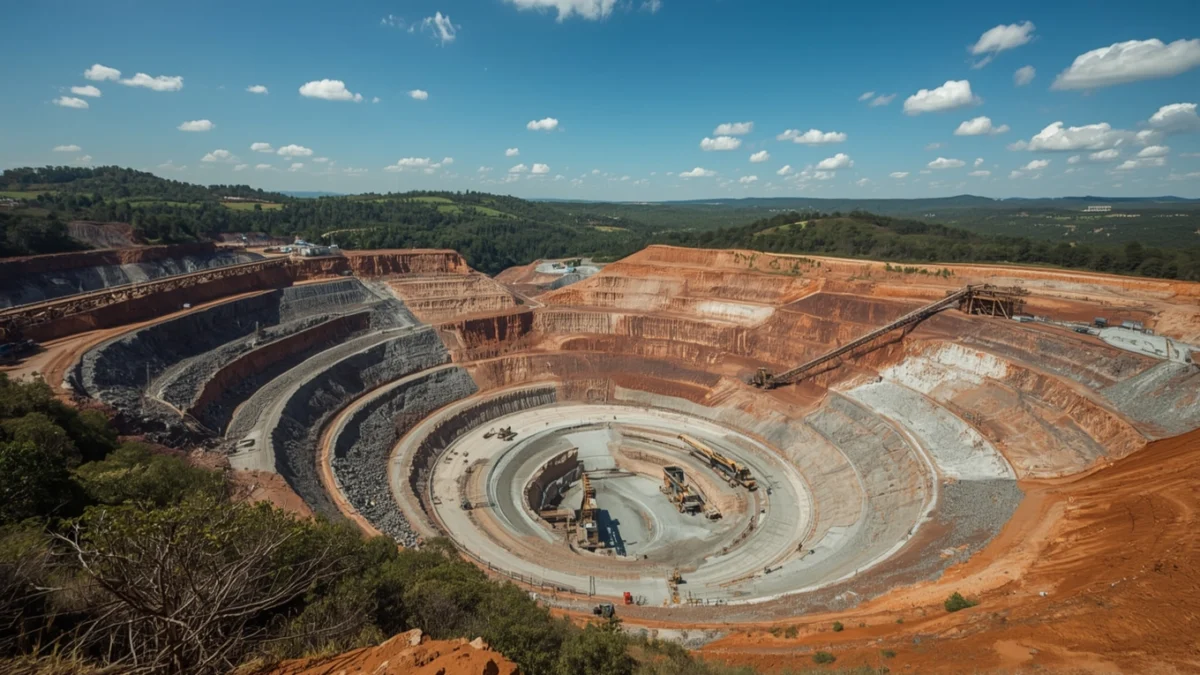
Introduction: Brazil’s Invisible Gold
Brazil holds a little known mineral treasure: deposits of rare earth strategically scattered across the territory. These materials are essential for modern technology, from smartphones to solar panels.
But do you know where exactly these riches are? The answer involves specific regions that few people know.
This guide reveals the main Brazilian rare earth deposits and their growing economic impact.
What Rare Lands Are and Why They Matter
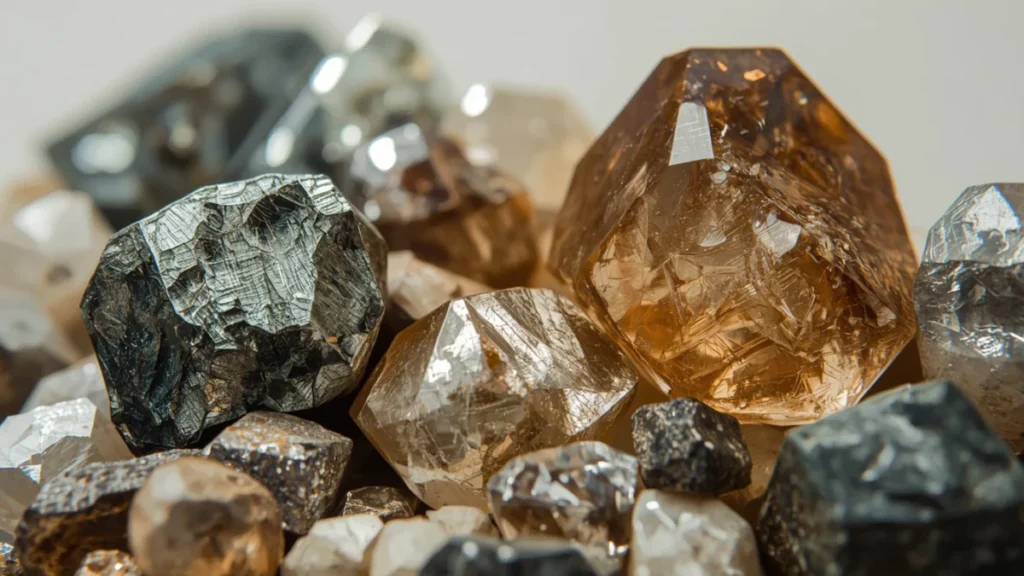
Rare Lands In Brazil Where They Stay
Rare earths are 17 chemical elements with unique and rare properties in nature. Brazil has great potential to extract these valuable materials.
These elements are fundamental for advanced technologies, from electronic components to military equipment and renewable energy.
Global demand grows exponentially, making Brazilian deposits increasingly strategic for the national economy.
According to mining experts, Brazil may become one of the world's leading producers in the coming years.
Main Rare Land Deposits in Brazil
Brazil concentrates its rare earth deposits in five main regions. Each has different geological characteristics and economic potential.
The most significant deposits are located in the Northeast and Midwest. These regions have the best mineral quality and greater volume of resources.
The Geological Agency of Brazil (CPRM) accurately mapped these areas. Data shows impressive concentrations of valuable elements.
Guanabara Bay and Fluminense Coastal
Rio de Janeiro is home significant rare earth deposits associated with monazite deposits. This region has great mineral potential.
Guanabara Bay contains ores rich in elements like lanthanum and neodymium. These materials are extremely valuable in the international market.
Recent studies indicate that the Rio region can produce hundreds of tons annually. Investment in extraction technology is crucial.
Private companies already show interest in developing projects in the area with environmental responsibility.
Planalto da Borborema (Paraiba and Pernambuco)
The Borborema Plateau in the Northeast concentrates important deposits of nepheline sienito and feldspar. These ores contain a significant amount of rare earth.
The region already has a history of successful mineral exploration. Existing infrastructure facilitates the development of new projects.
Researchers from UFPE (Federal University of Pernambuco) study this area intensely. The results indicate relevant economic potential for Brazil.
Deposits in the Midwest: Goiás and Mato Grosso
Goiás emerges as the most promising region for rare earth exploration in Brazil. The state has deposits of phosphate with rare earths excellent quality.
The Mine of Araxá, in Minas Gerais (next to the Midwest), is known worldwide. This complex already produces and processes rare earths commercially.
Geological studies show that Goiás and Mato Grosso contain unexplored reserves. The potential for growth is extremely high.
Government and private investments have increased significantly in these regions in recent years.
Minas Gerais: The Heart of Rare Land Mining
Minas Gerais is already the main rare earth extraction hub in Brazil. The region has accumulated experience and consolidated infrastructure.
Mina de Araxá is the most important operation, run by the multinational company Mosaic. This complex processes phosphate with relevant rare earth content.
The state concentrates cutting-edge scientific research on these materials. Universities and institutes work in constant innovation.
According to CPRM, Minas Gerais concentrates more than 60% of the mapped rare earth reserves in Brazil, especially in the Araxá region.
Other areas of Minas Gerais show exploration potential not yet fully developed. New projects are being planned with environmental rigor.
Other Regions with Potential: North and Northeast
The North Region, especially the Amazon, has rare earth deposits associated with titanium minerals. Access is challenging but feasible.
Rio Grande do Norte also has significant concentrations in coastal alluvial deposits. Extraction is technically simpler than in other regions.
Researchers from the National Institute of Space Research (INPE) mapped these areas with satellites. The data is promising for future investments.
Responsible exploitation of these regions can generate jobs and considerable regional economic development.
Economic and Strategic Benefits of Rare Lands
Brazil can position itself as a world leader in rare earth production. This movement would generate billions in annual revenue and create thousands of jobs.
Rare earths are essential for the global energy transition. Solar panels, wind turbines and batteries depend on these materials.
The technological independence of Brazil would increase significantly with proper exploitation. Less dependence on imports from other countries.
- Creation of thousands of direct and indirect jobs
- Export revenue over 5 billion annually
- Development of cutting-edge technological research
- Attraction of qualified foreign investment
- Strategic positioning in global geopolitics
- Impulse for national technology industry
Environmental Challenges and Sustainability
The exploitation of rare earth requires extreme environmental rigor. Inadequate mining causes significant damage to ecosystems.
Brazil has the opportunity to lead exploration sustainable and responsible rare earth. Other countries already make serious environmental mistakes.
Brazilian legislation is progressive in environmental protection. New projects should follow strict environmental impact regulations.
Investments in clean extraction technology are essential to enable long-term commercial projects.
Future Perspectives for 2026 and Beyond
Experts predict significant expansion of rare earth exploration in Brazil. New projects should start operation within the next 24 months.
China controls 90% of global production today. Brazil can break this global strategic dependence.
Private investments increase exponentially interest in Brazilian deposits. International partnerships are being negotiated intensively.
The demand for rare earth should double by 2030 according to projections of the International Energy Agency (IEA).
Where exactly are rare earth deposits in Brazil?
The main deposits are in Minas Gerais (Araxá), Rio de Janeiro (Baía de Guanabara), Paraíba, Pernambuco, Goiás and parts of Amazonas. Minas Gerais is the main hub with 60% of the mapped reserves.
What is Brazil's largest rare earth deposit?
The Mine of Araxá in Minas Gerais is the largest and only deposit in commercial operation. It's been processing phosphate with significant rare earth content for decades.
Why doesn't Brazil explore rare earth anymore?
Initial costs are very high, technology requires heavy investment and environmental challenges are complex. Strict legislation also provides for significant new projects.
How much can Brazil earn by selling rare earths?
Estimates indicate annual revenue potential between 5 and 10 billion dollars with commercial scale exploitation. This income would transform the economy of mining regions.
Conclusion: Brazil on the Road to Rare Lands
Brazil has strategic rare earth deposits located mainly in Minas Gerais, Rio de Janeiro, Northeast and Midwest regions. These mineral riches can transform the national economy.
Responsible exploitation of these resources is fundamental to the country's sustainable development. The moment is ideal for investing in technology and adequate infrastructure.
Start following rare earth exploration projects in Brazil. This is a theme that will transform the Brazilian economy in the coming years. Share this article with friends interested in mining and sustainability!
Sources: CPRM (Mineral Resources Research Company), UFPE, AIE (International Energy Agency), data from the Ministry of Mines and Energy.