In 2026, the NASA Prepares for a crucial phase of his lunar exploration. The new mission, part of the ambitious programme artemisThe main target is the mysterious South Pole of the Moon. This region promises discoveries that can transform our understanding of the natural satellite and the universe itself. The expectation is to find crucial evidence for future human housing, boosting science and space technology.
The Search for Frozen Water: The Treasure of the South Pole
The South Pole of Moon It's an area of great scientific interest. Its craters have permanently dark regions, where sunlight never reaches. In these cold places, scientists believe there may be large deposits of frozen water. The detection of this water is an essential factor for the future of space exploration.
Lunar water wouldn't just be for astronaut consumption. It could be divided into hydrogen and oxygen. These elements are rocket fuels and breathable air, respectively. This would drastically reduce the need to transport resources from Earth. The moon would become an interplanetary refueling station.
The new mission plans to use advanced rovers and instruments to map these deposits. Ice samples would be collected and analyzed at the scene. The amount and accessibility of this water will define the next steps to a sustainable lunar base. This resource is the key to long-term human presence.
In addition, the study of lunar ice can reveal secrets about the origin of the water on the Moon. It may indicate the history of comet and asteroid impacts. These discoveries would provide valuable information on the formation of the solar system. Ice analysis is fundamental to planetary geology.
Key Regions for Discovery
The landing sites of the Artemis mission have been carefully selected. They are near craters where the presence of water is most likely. Regions such as Shackleton Peak and Valley of Nobile They're priority targets. These dots offer both sunlight for energy and dark areas for ice.
The complex topography of the South Pole presents unique challenges. However, it also offers opportunities for discovery. The combination of robots and astronauts will allow for detailed exploration. NASA is prepared for the obstacles and rewards of the mission.
Exploring Lunar Geology and the Origin of the Solar System
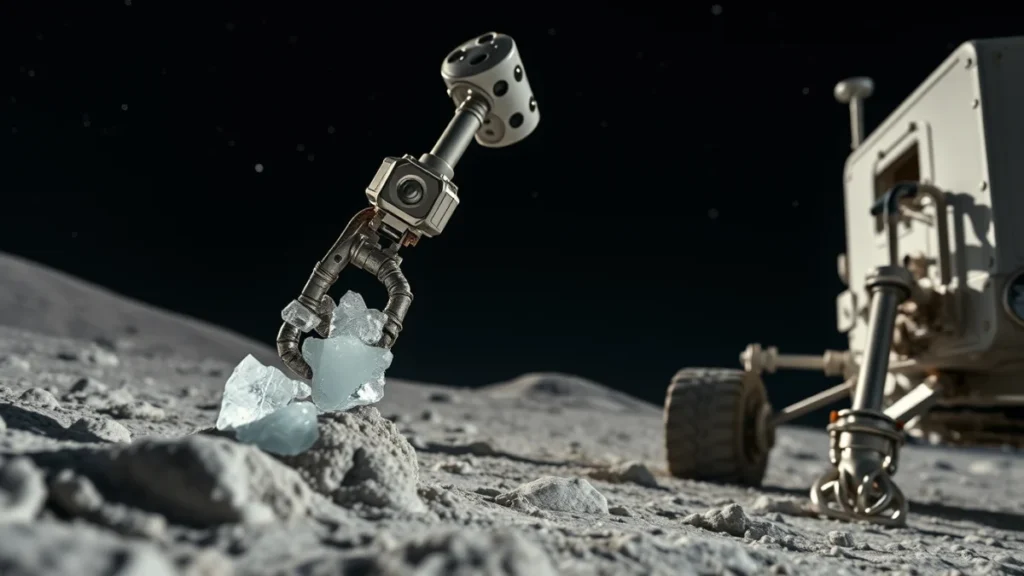
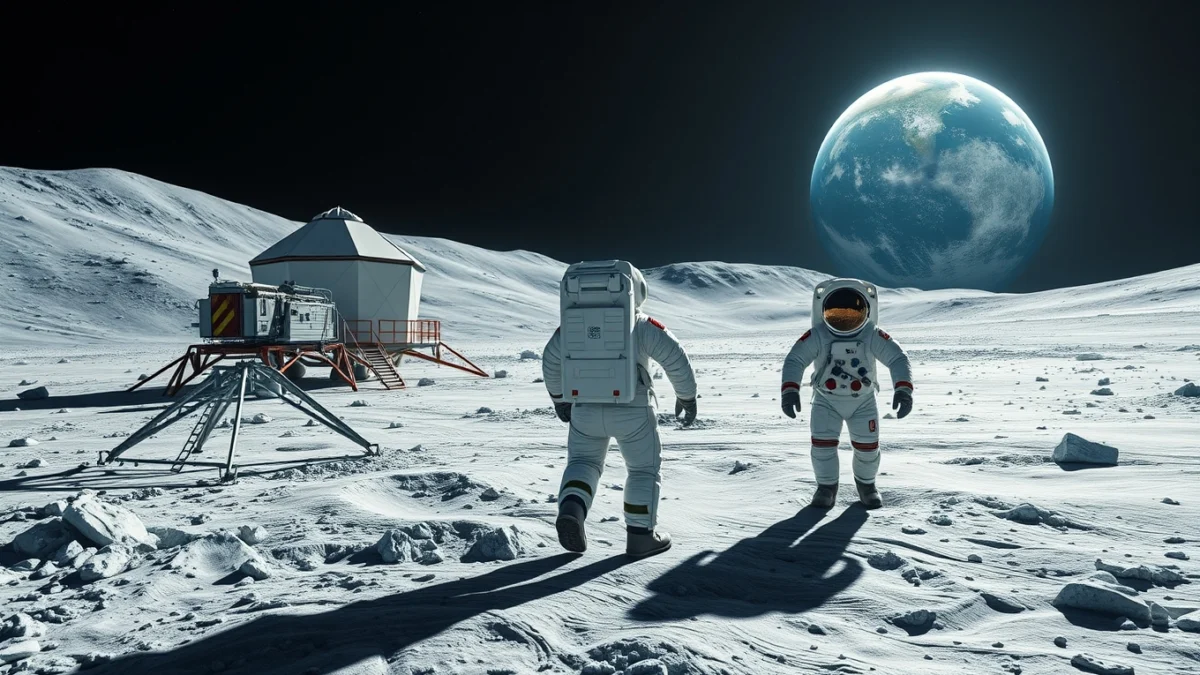
Generated by Leonardo AI (FLUX Schnell (faster and cheaper) — recommended)))
Beyond the water, NASA's new mission seeks to understand the lunar geology. The collection of rocks and regolites is crucial. This will allow us to study the composition and structure of the lunar crust. These samples can reveal details about the formation of the Moon and our planet.
Scientists expect to find rocks never before studied. The absence of erosion and plate tectonics on the Moon preserves ancient records. Moon rocks are time capsules of the early solar system. They provide clues about events cosmicinitials.
The analysis of these samples can confirm theories on the Great Impact Theory. This theory suggests that the Moon formed from the debris of a collision between Earth and a body the size of Mars. New samples can bring definite evidence. Understanding the formation of the Moon is fundamental to astrophysics.
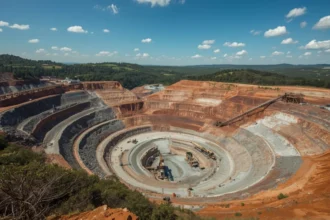
The southern lunar pole is a geographically diverse region. It is believed to contain materials of different depths of the lunar interior. The exploitation may reveal the presence of rare minerals. These minerals would have value for future space industries.
Testing New Technologies and Infrastructures
The Artemis mission is also a vital testing field for new technologies. NASA plans to deploy advanced equipment to the lunar surface. This includes new generation solar power generators and life support systems. The goal is to ensure the survival and work of astronauts.
Robotics will play a key role in exploration. New rovers and robotic arms will be tested for drilling and sampling. The autonomy of these systems is crucial for long-term missions. Technology is evolving rapidly.
In addition, the mission will test concepts of lunar habitats and bases. The effectiveness of inflatable structures and radiation shelters will be evaluated. The ability to build and maintain infrastructure on the Moon is a primary objective. This is an essential step for the colonization of other planets.
High-speed communication between Earth and the Moon will also be improved. New data transmission systems will be implemented. This will allow the sending of large volumes of scientific and operational information. Connectivity is vital for mission success. For more information on the importance of space exploration, visit MCTI news.
"The Moon is not just a destination, but a trampoline for the rest of the solar system. Discoveries at the South Pole will be the basis for future voyages to Mars and beyond." – Dr. Maria Clara Silva, astrophysicist and consultant of the Artemis mission in 2026.
The Moon as Platform for Astronomy
The hidden face of the Moon and its low noise environment are ideal for the astronomy. The absence of atmosphere and earth's light pollution offers a clear view of the universe. The mission can prepare the ground for the installation of lunar observatories. These observatories would make revolutionary discoveries.
Telescopes installed on the Moon could observe the universe at invisible wavelengths of the Earth. They could detect signs of exoplanets more accurately. The search for life off Earth would be improved. The Moon may be the next great site of astronomical observation.
The study of low frequency radio waves would be particularly beneficial. Earth blocks most of these waves. The moon would provide a quiet environment to capture them. This would allow the detection of distant and ancient cosmic phenomena. The origins of the universe could be revealed.
Impact of Mission on Economy and Society
The findings of the new mission will have a significant impact. They will boost the space economy and technological innovation. New industries and jobs will be created in sectors such as space mining and lunar tourism. Investment in research and development will continue to grow.
International collaboration is a pillar of the Artemis programme. Partnerships with other countries and private companies are essential. This shares the costs, risks and benefits of exploitation. Global cooperation accelerates scientific progress. Space exploration unites humanity.
The mission also inspires new generations of scientists and engineers. It demonstrates the potential of human creativity. The desire to explore and discover is a powerful engine of innovation. STEM education (Science, Technology, Engineering and Mathematics) receives an impulse. To stay in touch with the latest updates on the Artemis III mission, check out the Tecnoblog.
Benefits of Sustainable Lunar Exploration
Sustainable lunar exploration will bring many long-term benefits. It will allow a continuous and in-depth presence on the Moon. This is different from the Apollo missions, which were short-lived. The new approach aims at a lasting commitment.
The benefits include:
- Continuous access to rare geological samples.
- Tests of cutting-edge technologies in real environment.
- Potential for mining valuable resources.
- Base for advanced astronomical observatories.
- Impulse for innovation and global economy.
- Inspiration for future generations of explorers.
Is NASA really gonna find water on the moon?
NASA has already confirmed the presence of water on the Moon, especially in polar regions. The new mission focuses on determining the quantity, accessibility and shape of this water (ice). The expectation is to find significant deposits and map them. This is crucial for the sustainability of future lunar bases.
When will the astronauts return to the moon with this mission?
The Artemis III mission, scheduled for 2026, is the next step towards the return of humans to the lunar surface. She will include the first woman and the first non-white person to step on the moon. The landing is planned for the South Pole region. It's a landmark in space exploration.
What kind of science will be held on the moon?
Science will be multifaceted. It will include the study of lunar geology and the search for frozen water. There will also be the installation of instruments to monitor the space environment. The Moon will serve as a platform for astronomy and resource research in situ. The mission seeks to understand the formation of the solar system.
How can mission discoveries benefit Earth?
Discoveries can generate technological advances with terrestrial applications. This includes new energies, materials and recycling systems. Space exploration inspires science and education. It also promotes international cooperation and fosters the economy. The benefits are both direct and indirect for mankind.
Conclusion: A New Chapter in Human Exploration
NASA's new mission to the moon in 2026 represents a giant leap for mankind. It seeks water, unexplored rocks and a sustainable future in space. The discoveries in the lunar south pole will not only unlock secrets of the universe, but will also pave the way to the exploration of Mars and beyond. Stay updated with the next steps of this incredible journey. Follow NASA's advances.