
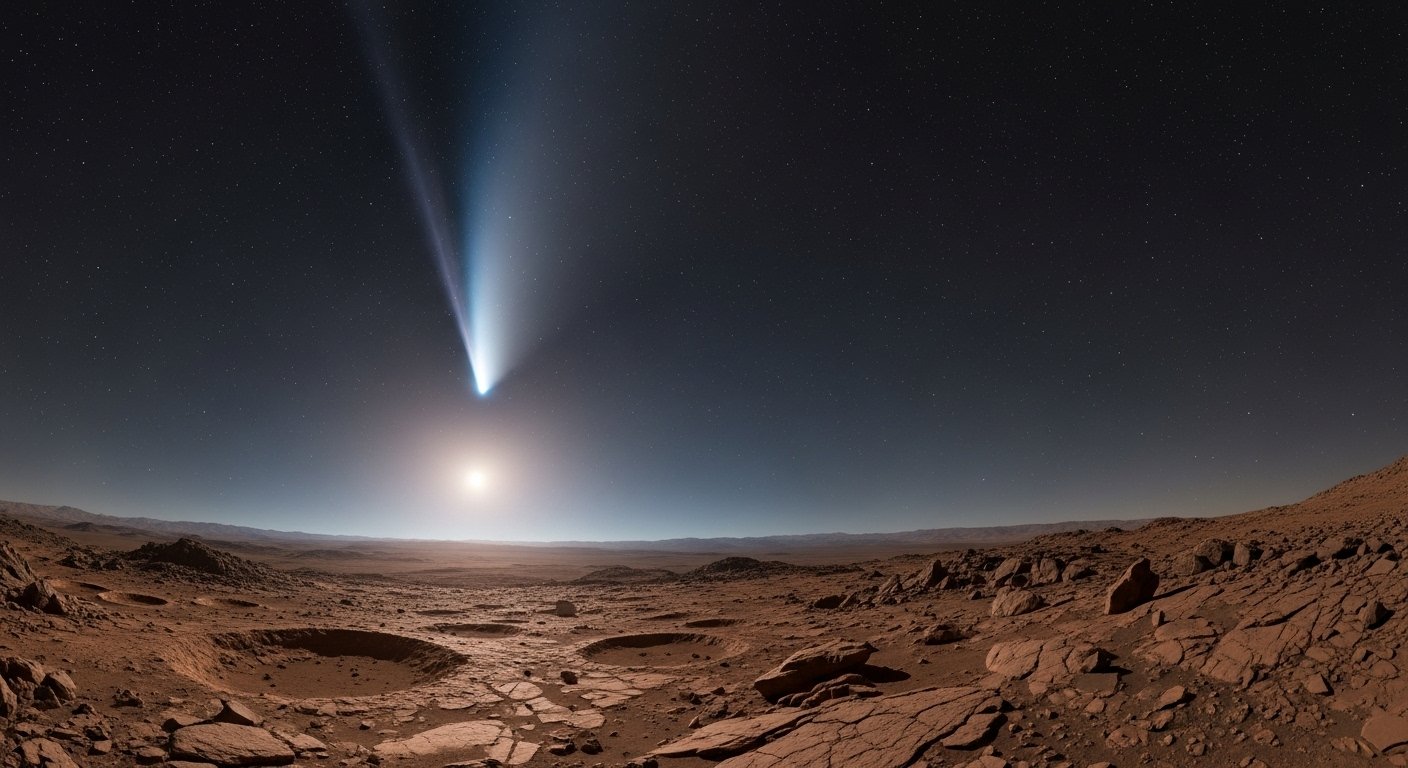
NASA's Perseverance rover managed to capture images of the interstellar comet 3I ATLAS during its passage near Mars in early October. According to information released by the portal Digital Look and the site Crusoe, this is only the third time an interstellar object has been documented in our Solar System.
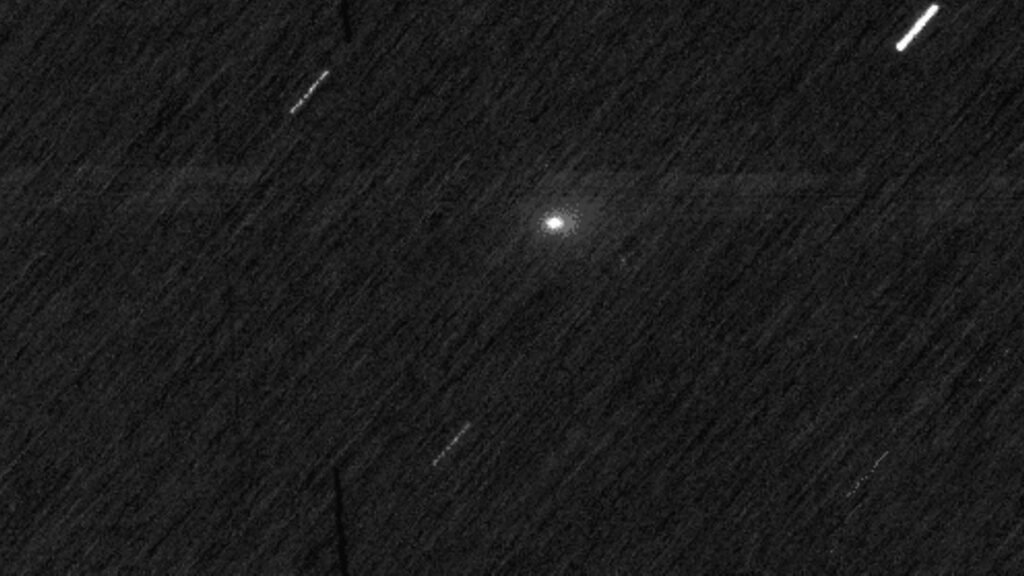
The images were recorded on October 4, when the comet passed about 30 million kilometers from Mars – a distance that allowed space probes to capture the historical moment.
Multiple probes have recorded the event
It was not only Perseverance that was able to document the passage of 3I/ATLAS. As reported by Digital Look, the satellites ExoMars Trace Gas Orbiter (TGO) and Mars Express, both in Martian orbit, also participated in this joint observation.
The rover used its Navcam navigation camera to capture the comet. The process took about ten minutes to generate the final image, a period during which the object traveled a long trajectory in space.
The ExoMars probe activated its CaSSIS system to record a sequence that shows a white dot moving slowly through space.
Technical challenges of observations
According to scientific publicist Alexsandro Mota, quoted by Digital Look, it was not expected high-quality images of these Technology. "We knew nothing exuberant would come out. We expected photos in low resolution, very simple and dark," he commented.
The expert explained that ExoMars was not designed to observe interstellar objects: "She has technology to study Mars' atmosphere and mapping the gases that are there.
Visual effect on images
The photographs show an elongated luminous trail that generated speculation on social media about the true shape of the comet. Some even suggested that the object would be cylindrical.
Astronomer Marcelo Zurita, presenter of the Space Look program, clarified that this phenomenon is the result of the long exposure: "it is similar to the nighttime photos of cars on a highway, when the lights of the headlights form continuous tracks.
What we know about 3I/ATLAS
Comet 3I/ATLAS was discovered in July this year and travels at a speed of approximately 58 km/s. According to information from Website Crusoe, this is only the third interstellar object documented in the Solar System.
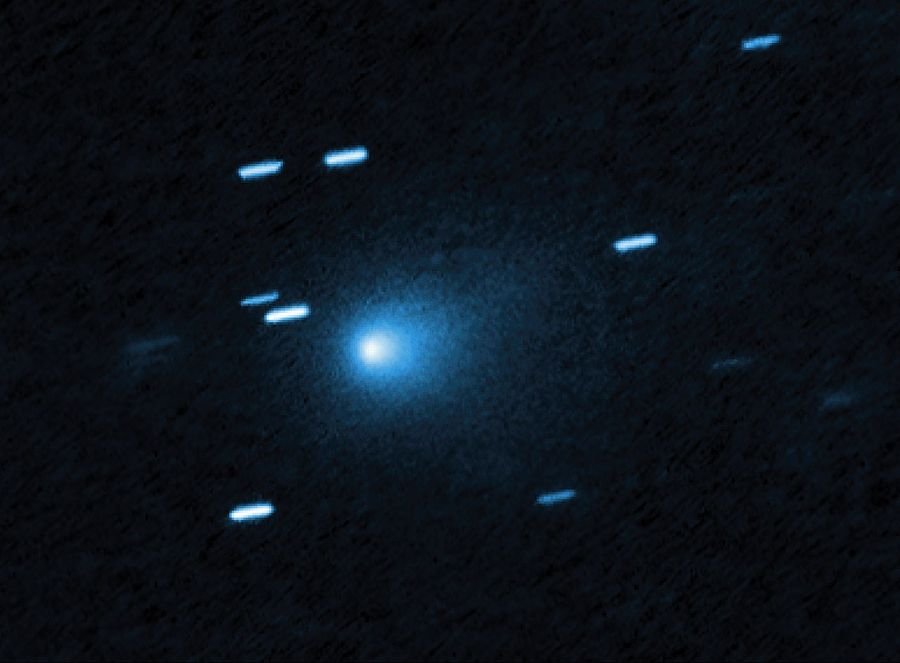
In the images, you can see the diffuse cloud that surrounds the cold core of the comet, known as coma. This structure forms when the object approaches the Sun – the heat heats the frozen material, releasing gases that extend for hundreds of thousands of kilometers.
Real comet size
After speculations emerged that the comet would have 50,000 kilometers, astronomer Marcelo Zurita clarified that the measurement made by the Hubble telescope is more accurate. The researchers analyzed the densest region of the coma and estimated a maximum diameter of 4.5 kilometers.
Official confirmation still pending
Despite the captured images, NASA has not officially confirmed that Perseverance has registered comet 3I/ATLAS. According to Crusoe, the U.S. government shutdown delayed communications from the agency, compromising immediate disclosures.
The images show a possible luminous trace typical of comets, but more detailed analyses are needed to definitively confirm the identity of the photographed object.
Next search steps
Researchers from various space agencies work to obtain more data on 3I/ATLAS. NASA's Mars Reconnaissance Orbiter is also analyzing the event, and new data should be released soon.
The scientific community awaits the maximum approach of the comet to the Sun in the coming months. This window is considered essential for more detailed observations, which may reveal information about its composition and trajectory.
This joint effort between space agencies demonstrates the complexity of observations at this distance and the scientific importance of studying objects from outside our solar system.