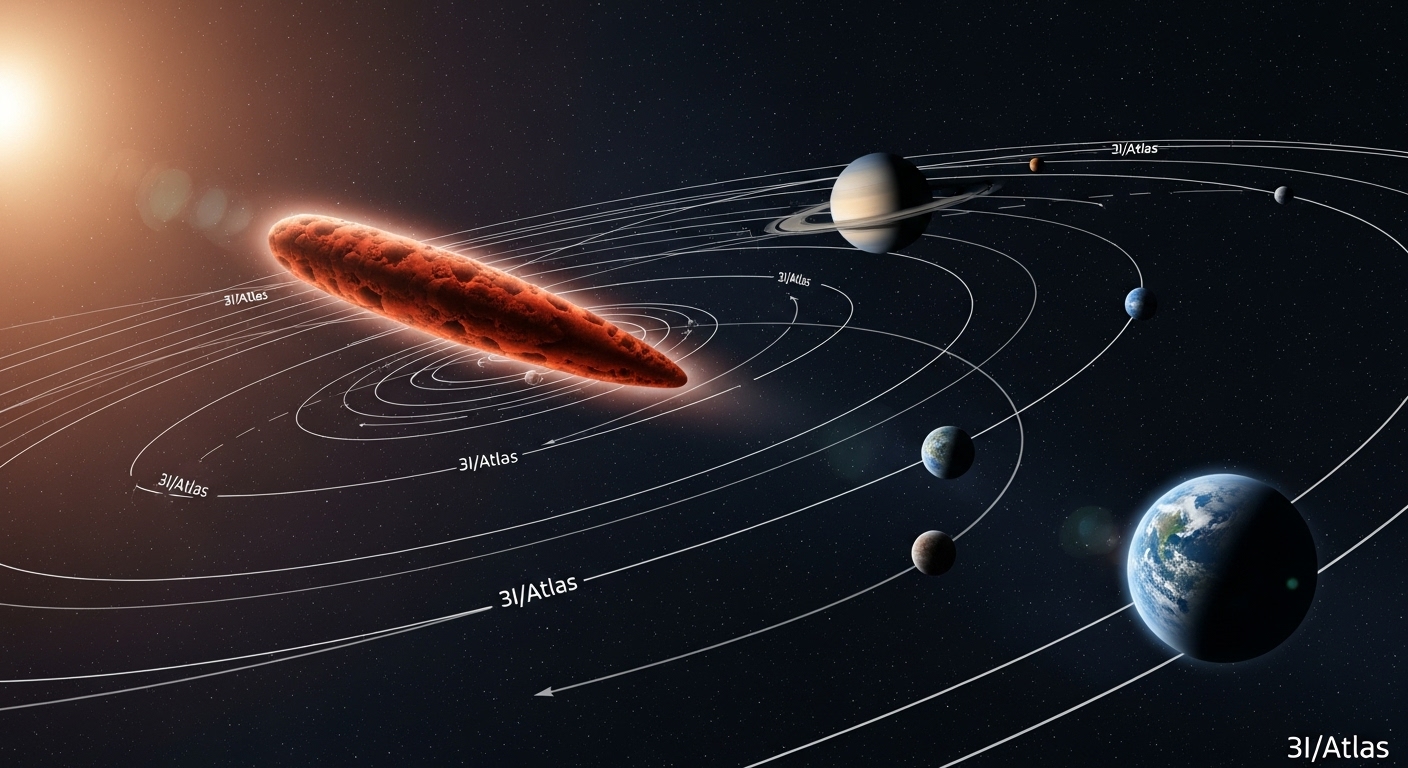
Since humanity began to look at the sky, we have always wondered about the mysteries of the universe. Recently, a new category of cosmic visitors has attracted the attention of astronomers around the world: interstellar objects. These unique celestial bodies travel among the stars and offer valuable clues to the formation and evolution of planetary systems.
What Are Interstellar Objects?
One interstellar object is any celestial body that originates from outside our solar system and crosses interstellar space. Unlike comets and asteroids orbiting our Sun, these cosmic visitors follow hyperbolic trajectories, which means they are not gravitationally linked to our solar system.
These objects carry precious information about other star systems, offering scientists a unique opportunity to study material formed in completely different conditions than those found in our own solar system.
Oumuamua: The First Visitor Confirmed
In October 2017, the Pan-STARRS1 telescope in Hawaii detected the first interstellar object confirmed story: 1I/2017 U1, more known like Oumuamua. The name, of Hawaiian origin, means "messenger" or "beater".
Oumuamua presented characteristics that intrigued scientists:
- Elongated format: About 400 meters long and only 40 meters wide
- Reddish surface: Similar to objects of the outer Solar System
- Unexplained acceleration: Showed a subtle deviation from his predicted trajectory
- No coma: It did not present the typical tail of gas and dust of comets
These unique properties generated intense debates in the scientific community about their true nature and origin.
Borisov: The Second Guest
In August 2019 the astronomer Amateur Gennady Borisov discovered 2I/Borisov, the second interstellar object Confirmed. Unlike Oumuamua, Borisov behaved more like a traditional comet, developing a bright coma and a visible tail.
Borisov's observations revealed:
- Similar composition to comets of the Solar System
- Presence of water and carbon monoxide
- Typical comet activity when near the sun
- Fragmented nuclear structure
These data suggested that some planetary formation processes can be universal, regardless of the star system.
3I/ATLAS: The Third Interstellar Visitor
Also called C/2025 N1 and previously identified as A11pl3Z, 3I/ATLAS It's a interstellar comet in 1 July 2025 by the station ATLASin Río Hurtado, Chile. At the time of discovery, the object was approaching the inner Solar System, about 4.5 astronomical units (AU) ed Sun.
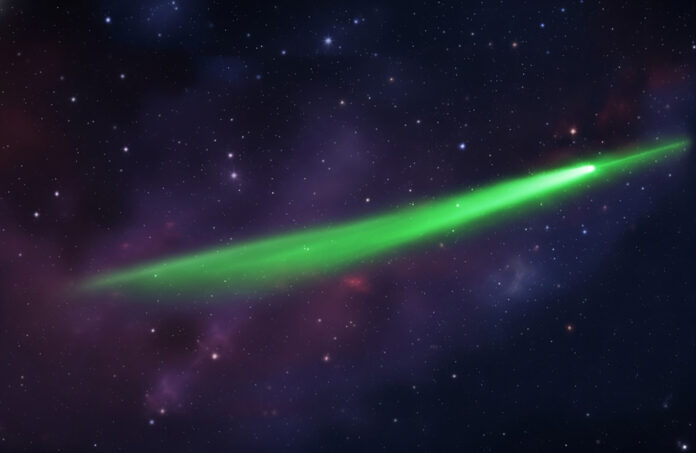
A recent study identified that the interstellar comet 3I/ATLAS presents a rare "ancient", phenomenon confirmed in new observations published in arXiv. Discovered in July by the system ATLAS, financed by NASA, 3I/ATLAS is the third and fastest interstellar visitor already registered in our Solar System, after the asteroid ‘Oumuamua (2017) and the comet 2I/Borisov (2019).
Why Do Scientists Fascinate?
Other Worlds Windows
Cada interstellar object works as a time capsule, preserving information about the conditions existing in other star systems. They allow us to study material formed under different conditions of temperature, pressure and chemical composition.
Astronomical Theories Test
These cosmic visitors allow us to test our theories about planetary formation and orbital dynamics. When an object like Oumuamua has unexpected characteristics, forces scientists to rethink established models.
Origin of Life
Some scientists speculate that interstellar objects could have transported organic material between star systems, contributing to the distribution of life for the universe. This hypothesis, known as panspermia, gains new relevance with these findings.
Frequency and Diversity
Before 2017, we did not know how many interstellar objects passed through the Solar System. Recent discoveries suggest that these visitors may be more common than we thought, raising questions about how many may have gone unnoticed.
Observation Challenges
Study a interstellar object presents unique challenges for astronomers:
Time Limited
These objects cross our solar system quickly, offering very narrow observation windows. Oumuamua, for example, was detected when it was already leaving the solar system.
Small Size
Most interstellar objects discovered so far are relatively small, making it difficult to collect detailed data on their composition and structure.
Extreme Distances
When detected, these objects are usually at enormous distances from Earth, limiting the resolution of observations and the amount of light available for spectroscopic analysis.
Detection Technologies
The Advances technology have been crucial to identify interstellar objects:
Auto Telescopes
Projects such as Pan-STARRS, LINEAR and Catalina Sky Survey continuously scour the sky, identifying moving objects and calculating their orbits.
Artificial Intelligence Algorithms
Automated machine learning systems help process huge amounts of astronomical data, identifying patterns that could go unnoticed by humans.
Collaboration Networks
The discovery and characterization of interstellar objects requires international cooperation between observatories, allowing continuous observations as the Earth rotates.
Future Space Missions
The scientific community already plans missions dedicated to the study of interstellar objects:
ESA Interceptor
The European Space Agency is developing the Interceptor mission, designed to be quickly redirected to study fast-passing objects, including potential interstellar visitors.
Quick Mission Concepts
Scientists are developing concepts for ships space that could be launched quickly after detecting a new interstellar object, allowing detailed studies in situ.
Implications for Astronomy
The discovery of interstellar objects is revolutionizing our understanding of the cosmos in various ways:
Interstellar Space Density
Recent detections suggest that space between stars may be more "populated" than we previously thought, with implications for galactic evolution models.
Material Exchange Between Systems
These objects demonstrate that there is active material exchange between different star systems, suggesting that our galaxy is a more dynamic and interconnected environment.
New Scientific Issues
Each new discovery raises questions we didn't know how to ask before, opening up new fields of research and astronomical research.
fascination Continues
Objects interstellars represent a border completely New in astronomy. They connect us directly with other star systems, offering clues to the diversity and universality of cosmic processes.
Cada interstellar object discovered adds a piece to the puzzle of how our galaxy works and how planetary systems form and interact. They remind us that our solar system does not exist in isolation, but it is part of a dynamic and interconnected cosmos.
With more powerful telescopes going into operation and Technology of detection constantly improving, we can expect to discover many more of these cosmic messengers in the coming years. Each discovery promises to reveal new secrets about our place in the universe and about the processes that govern the formation and evolution of the worlds beyond our own solar system.
The fascination of scientists with these interstellar visitors reflects our fundamental curiosity about the cosmos and our desire to understand the mysteries that are hidden among the stars.