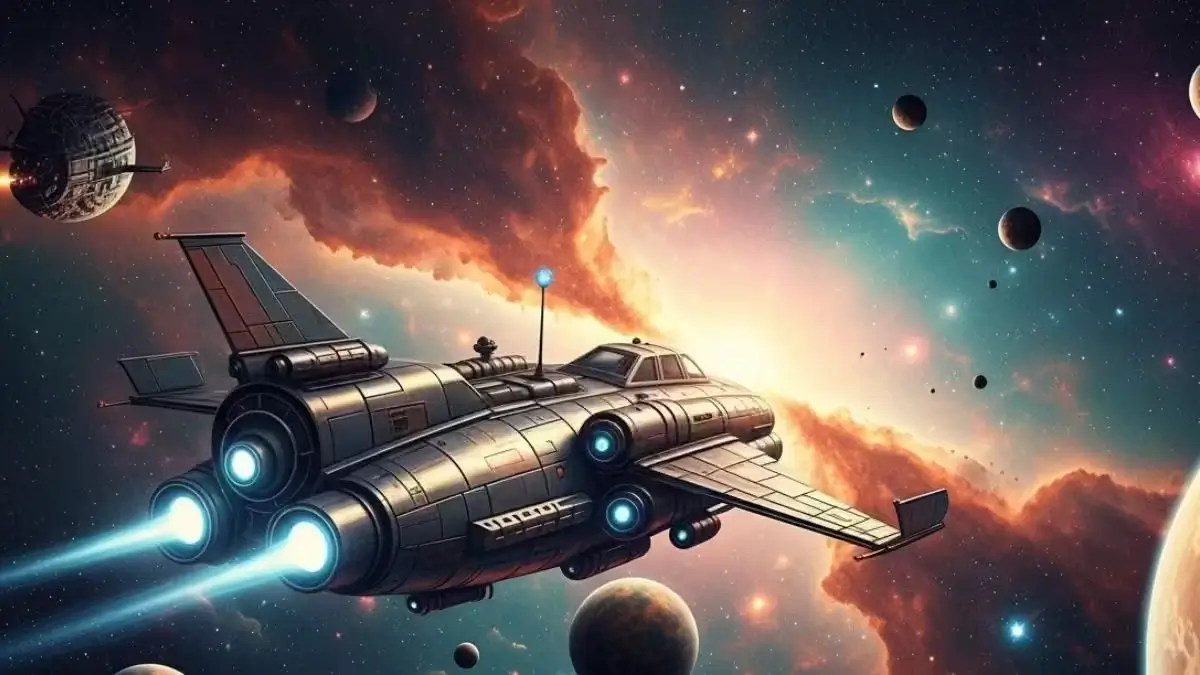
Scientists reveal the greatest challenges for interstellar travel and to reach other solar systems. Revolutionary drive can change everything in 50 years.
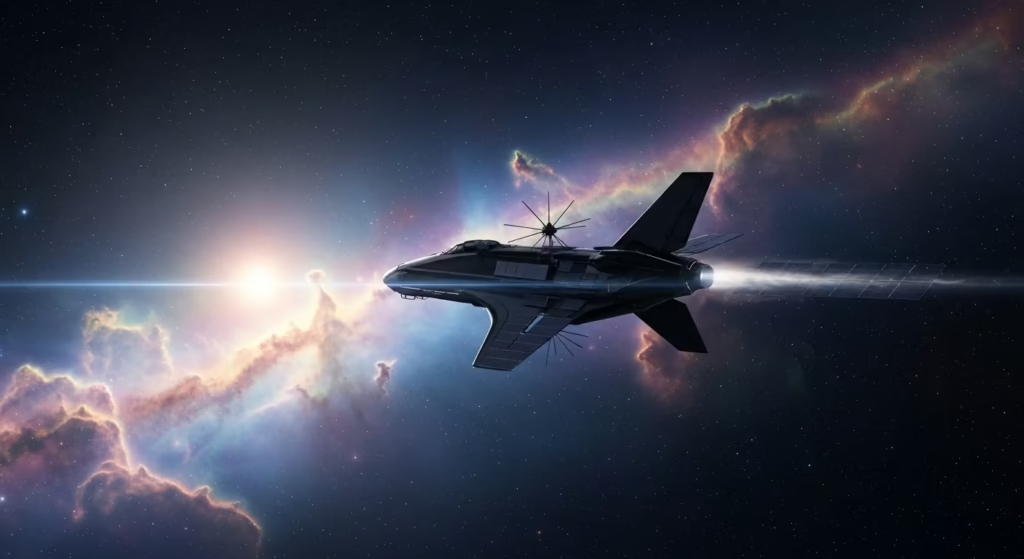
Humanity has always looked into the night sky with curiosity. Now, for the first time in history, we have the technology to turn this ancestral dream into reality. Interstellar travel is no longer science fiction. — They're the next big leap of our species.
Proxima Centauri, the closest star to the Sun, is only 4.24 light-years away. It looks close, but it represents a journey of 40 trillion kilometers. With current technology, a spacecraft would take more than 73,000 years to get there. But calm down, let's explain why this can change dramatically over the next few decades.
What's stopping us from traveling among the stars today?
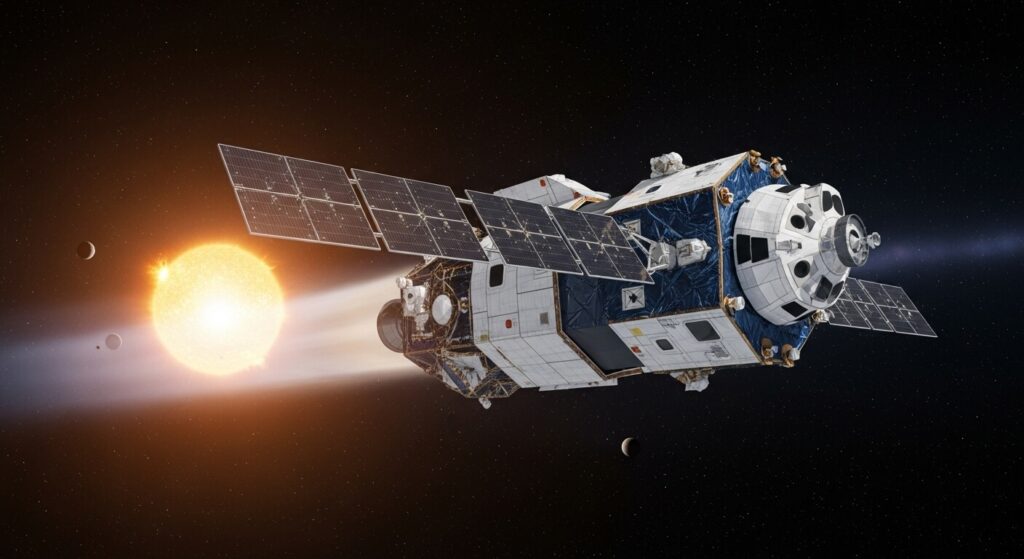
The answer is simple: speed. The fastest ships ever built by mankind barely scratch the surface of what we need to interstellar travel.
A Parker Solar Probe probe, the fastest object made by man, reaches 700 thousand km/h as it approaches the sun. Impressive? Yeah. Enough for interstellar travel? Not by a long shot.
To make these journeys viable, we need to reach at least 10% of the speed of light — About 30,000 miles per second. This would reduce the journey to Proxima Centauri to "only" 43 years.
And it doesn't stop there. There are other monumental challenges that the Science You need to figure this out:
Fuel: Charging enough fuel for a decades' journey makes any ship impossible to take off. It's like trying to fly carrying your own airport.
Cosmic radiation: O space between the stars is bombarded by radiation that can be lethal to astronauts on long journeys.
Maintainer: Equipment fails. On a 40-year journey, how do you fix a ship in the middle of absolute emptiness?
The revolution that can change everything
But here comes the exciting part. Scientists around the world are developing technologies that can solve these problems once and for all.
The Breakthrough Starshot project, led by physicist Stephen Hawking before his death, proposes something revolutionary: ships the size of a smartphone driven by terrestrial lasers.
These nanowaves would weigh only a few grams and could reach 20% of the speed of light. Result? Arrival at Proxima Centauri in just 20 years. Here's what we found: the first tests have shown promising results.
NASA's not still either. The American space agency invests heavily in nuclear propulsion, which could drastically reduce travel time. Nuclear reactors compacts would provide enough power to accelerate ships at unthinkable speeds today.
Why does it matter now?
The space race is no longer between countries — It's between our species and time. Climate change, finite resources and existential risks make interplanetary expansion and interstellar a matter of survival.
Elon Musk it does not hide its vision: making humanity a "multiplanetary species. But why stop at Mar? ? The real prize is the exoplanets. — potentially habitable worlds orbiting other stars.
So far, we've identified over 5,000 exoplanets. Some, such as Kepler-452b, are considered "primes of Earth" for its similarities to our planet. But take it easy. — We need to get there first.
What do the experts say?
Dr. Philip Lubin, a physicist at the University of California and pioneer in photonic propulsion, is optimistic: "Interstellar travel is no longer a matter of ‘if’ for ‘when’. Technology exists, we just need to perfect it. "
On the other hand, experts warn of practical challenges. Dr. Mae Jemison, former NASA astronaut and current project leader 100 Year Starship, highlights: "It's not enough to build the ship. We need to rethink communication, sustainability and even governance in missions that last generations. "
The international scientific community is divided between two main approaches:
Fast robotic missions: Small probes that arrive in decades and send data back.
Slow human missions: City ships that take centuries, but carry settlers to establish permanent human presence.
What are the impacts for ordinary people?
It may seem distant, but technologies developed for interstellar travel already impact our daily lives.
Advanced propulsion research has led to improvements in batteries, solar panels and even medicines. The miniaturization required for nanowave revolutionizes the electronics we use in everyday life.
But the deepest impact is cultural. Knowing that we can reach other stars changes our perspective on the place of humanity in the universe. We are no longer prisoners of the Solar System.
Curiosity that will surprise you
The most realistic interstellar journey planned so far would last 6,300 years using current technology. This means that those who embarked today would not reach their destination until 8,324.
Next Centauri has at least one planet in the habitable zone — Next b. You may have liquid water and living conditions as we know it.
If we started a trip to Alpha Centauri today and another one in 50 years with advanced technology, the second ship would arrive first. It's the paradox of overtaking. — It's better to wait for better technology.
[Image hint: Artistic illustration of a futuristic spacecraft approaching a distant star system, with Proxima Centauri shining in the background and the planet Proxima b visible as a small blue dot]
The future is closer than we think.
The next two decades will be decisive. Robotic missions to Mars will test essential technologies for longer journeys. The Gateway lunar space station will be the trampoline for deep space expeditions.
Private companies like SpaceX, Blue Origin and Virgin Galactic are revolutionizing access to space, making it cheaper and more accessible. Every rocket that takes off approaches the stars.
Space agencies from all over the world — NASA, ESA, JAXA, ISRO — They joined forces in joint projects. Interstellar exploration will necessarily be an effort of all humanity.
And you, are you prepared to see the first signs of life in another solar system? The answer can still come in this generation. Tell us what thrills you most on this journey to the stars!