

National companies invest heavily in collaborative artificial intelligence to optimize operations and reduce costs by up to 40%
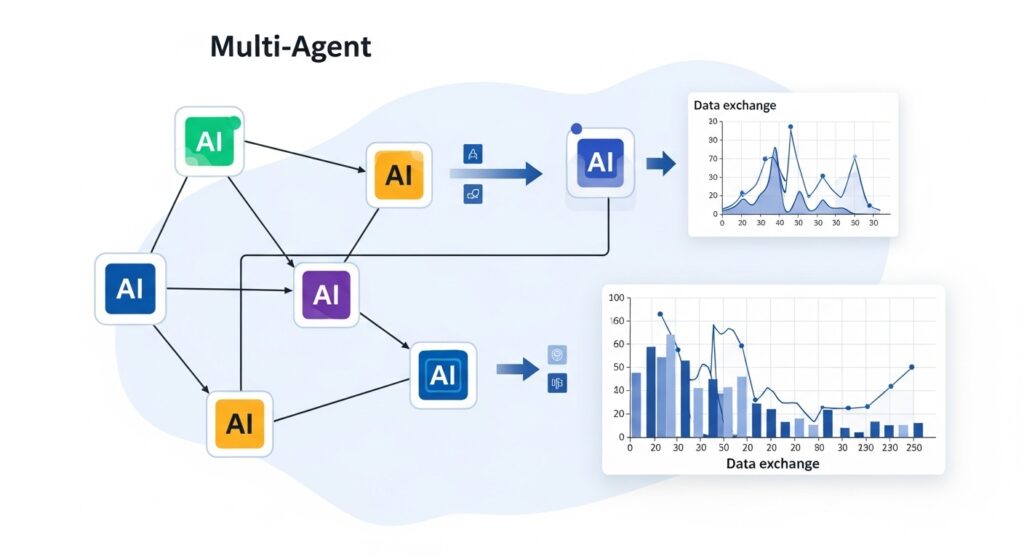
The year 2025 marks a turning point in the evolution of artificial intelligence in Brazil. Companies from various sectors are adopting a new technological approach that promises to revolutionize the way organizations operate: multi-agent AI systems. This innovation, which allows multiple agents of Artificial intelligence collaborate to achieve complex goals, is becoming the main trend of the brazilian tech market.
What Multi-Agent Systems Are
The Multi-agent systems represent a significant development in relation to traditional AI models. Instead of relying on a single centralized artificial intelligence, this Technology uses several specialized agents working together, each with their own specific capabilities and functions. This collaborative approach allows companies to solve more complex problems and optimize workflows more efficiently.
In the Brazilian business context, this technology is being applied in areas such as customer service, data analysis, inventory management and strategic decision making. The ability of different AI agents to communicate and share information in real time has generated impressive results in terms of productivity and reduction of operational costs.
Democraticisation of the AI in the National Market
One of the main features of this new era of Artificial intelligence It's your growing democratization. Small and medium-sized Brazilian companies, which previously had no access to Technology advanced AI due to high costs and technical complexity, can now implement multi-agent solutions with more affordable investments.
This democratization is being driven by the development of more intuitive AI platforms and the reduction of implementation costs. Companies of national technology have developed specific solutions for the brazilian market, considering the cultural and regulatory particularities of the country.
Impact on Customer Service
The customer service sector has been one of the main beneficiaries of multi-agent AI systems. Brazilian companies are implementing networks of specialized agents that can handle different types of consultations simultaneously. One agent can be responsible for technical issues, another for sales and a third party for after-sales support, all working in a coordinated way to provide a more fluid consumer experience.
This approach has resulted in a significant improvement in customer satisfaction, with reduced response times and more efficient problem solving. Large Brazilian retailers report increases of up to 35% in customer satisfaction after the implementation of these systems.
Challenges and Opportunities
Despite the obvious benefits, the implementation of multi-agent AI systems also presents challenges. The need for integration with legacy systems, data security issues and the training of technical teams are some of the obstacles that Brazilian companies need to overcome.
On the other hand, opportunities are immeasurable. The ability to process large volumes of data, identify complex patterns and make automated decisions is allowing Brazilian companies to become more competitive in the global market. Sectors such as agribusiness, finance and e-commerce are at the forefront of this transformation.
Investments and Future Perspectives
The Brazilian multi-agent AI market is attracting significant investments. According to sector data, the commercial value generated by AI and machine learning should reach the US brand$ 4.4 trillion globally by the end of 2025, with Brazil representing an increasing portion of this amount.
Companies of national technology are developing innovative solutions that combine artificial intelligence with other emerging technologies, such as blockchain and quantum computing. This convergence Technology promises to create even greater opportunities for transformation digital of Brazilian organizations.
Conclusion
The revolution of multi-agent AI systems in 2025 represents much more than a simple technological evolution. It is a fundamental transformation in the way Brazilian companies operate, compete and relate to their customers. With the democratization of this technology, companies of all sizes have the opportunity to benefit from Artificial intelligence collaborative, creating a promising scenario for the future of innovation in Brazil.
The growing adoption of these systems indicates that 2025 will be remembered as the year in which artificial intelligence ceased to be a future promise to become a reality present in the daily lives of Brazilian companies, driving a new era of productivity and efficiency operational.
Source: Analysis based on market data and technological trends identified by industry experts.