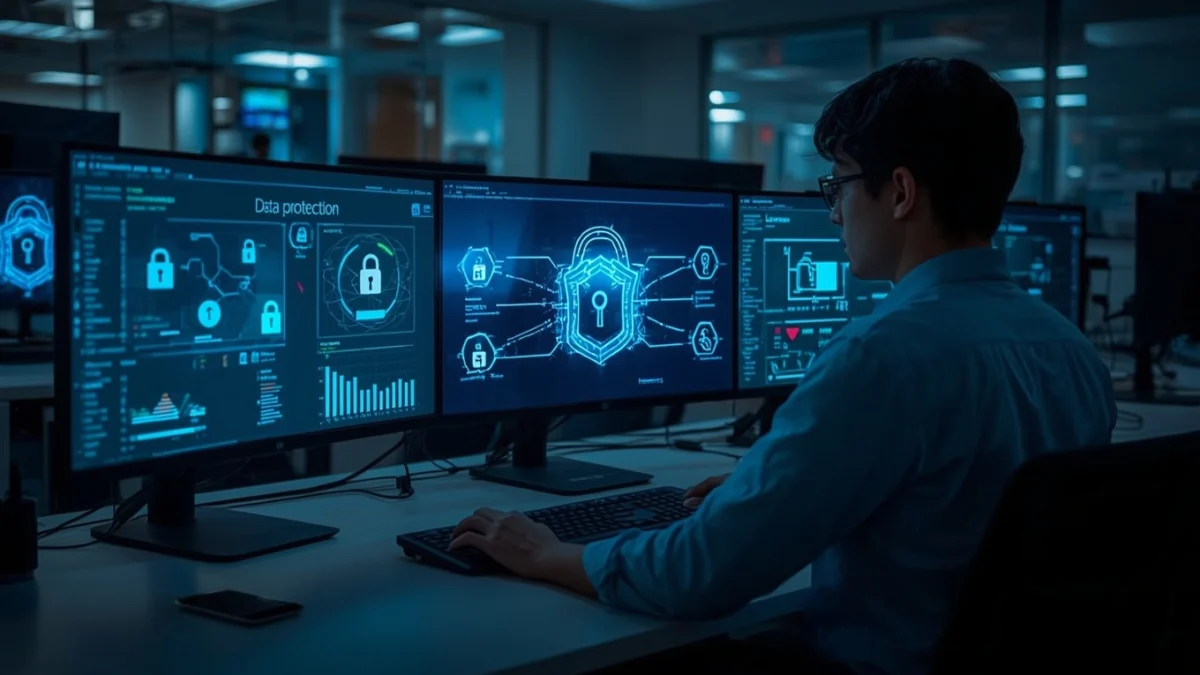
What LGPD is and Why Protect Sensitive Data
A General Data Protection Act (LGPD) entered into force in 2020. It regulates how companies collect and use personal data in Brazil. Any organization that processes customer information is subject to the law.
Sensitive data includes bank information, medical history, and criminal records. Your protection is mandatory by law. Companies that default suffer fines of up to R$ 50 million.
Compliance with LGPD It's not optional. It's an investment in security and reputation. Customers rely more on companies that protect their information.
Implementing adequate protection reduces leak risks. It demonstrates commitment to users' privacy. Your business wins.
Classification of Sensitive Data You Need to Protect
How to Protect Sensitive Data The LGPD
Sensitive data goes beyond passwords and documents. They include any information that reveals racial or ethnic origin. Political, religious or philosophical affiliation are also protected.
Genetic, health or sexual life information is highly sensitive. Biometric data such as facial recognition are included. Criminal records require maximum protection.
Data of minors receive special protection from LGPD. Financial and bank account information is critical. Home address and location also deserve care.
To correctly identify what is sensitive is the first step. Not all information requires the same level of protection. Classification helps target resources properly.
Practical Examples of Sensitive Data
A medical clinic collects history of patients' diseases. A school stores academic records of minors. A digital bank manages financial information from millions of users.
An e-commerce can collect contact data and address. A recruitment company collects information from candidates. An insurance company requests a history of claims and health.
Implement Encryption: The Base of Protection
Encryption turns readable data into unreadable code without the correct key. It's the most important defense against leaks. All sensitive data must be encrypted.
Use AES-256 encryption for data at rest on servers. For data in transit, implement HTTPS protocol on all sites. TLS 1.2 or higher protects communications between systems.
Encryption keys need to be stored separately from data. Use professional key managers like AWS KMS. Regular key rotation is mandatory for good practice.
Train your team on the importance of encryption. Document all methods used. Regular audit checks if encryption is working.
Recommended Tools and Software
BitLocker encrypts disks on Windows computers. FileVault protects data on computers Apple. VeraCrypt offers open source encryption for any operating system.
For servers, choose solutions like HashiCorp Vault. Bitwarden manages passwords securely. 1Password offers professional alternative with corporate resources.
Access Control: Who Can See Which Data
Access control defines who can access sensitive data. Not every employee needs to see all the information. Principle of lesser privilege is essential here.
Implement multifactorial authentication (MFA) on all systems. Simple passwords are not enough. Combine password with temporary mobile code.
Register all access to sensitive data on logs. Who accessed it when he accessed it and what was accessed. This tracking quickly identifies abuse.
Review permissions regularly, at least every six months. Employees who change sectors must lose old access. Off, they need access revoked immediately.
Backup and Data Recovery As LGPD
Backups protect against data loss by attacks or failures. Sensitive data in backups also need protection. Use encryption in backup files.
Test regularly whether the backups actually work. Backup is useless if you can't recover. Do practical tests every three months.
Keep backup copies in different locations. If a server is attacked, data in another location will be secure. Use reliable cloud like Azure or Google Cloud.
Set backup retention period. How long does sensitive data need to be stored? LGPD requires you to delete data when no longer required.
According to LGPD, companies suffering from data leakage should notify affected within 2 working days. Failure in this notification results in additional fines. Source: Law 13.709/2018.
Continuous Compliance and Security Audits
LGPD compliance is not unique but continuous. Threats constantly evolve and defenses need to follow. Check your security regularly.
External audits They bring an impartial look at their safety. Experts identify vulnerabilities that internal team may not see. Audit at least once a year.
Keep documentation of all security practices. Incident response plans, password policies, training records. Documentation proves compliance if authorities question it.
Designate a Data Protection Officer (DPO). That person coordinates LGPD compliance in the company. He's in charge of communicating with regulators.
LGPD Practical Compliance Checklist
- Complete inventory of collected and stored data
- Encryption implemented on sensitive data
- Access controls and multifactorial authentication activated
- Clear and up-to-date privacy policy
- Encrypted backups in multiple locations
- Access logs regularly monitored
- Data protection trained team
- Documented incident response plan
- DPO formally appointed
- Safety audit carried out annually
Team Training: Your Best Shield
Security starts with people. Well-trained employees avoid mistakes that cause leaks. Invest in continuous education on data protection.
Explain what phishing is and how to identify suspicious emails. Show importance of strong and unique passwords. No sharing credentials between colleagues.
Create a safety culture where everyone cares about protection. Report suspicious behavior without fear. Reward secure data practices.
Do monthly training on new attacks and threats. Simulate phishing attacks to test knowledge. Document who received training and when.
Response to Incidents and Contingency Plan
Leakage can happen even with good practices. Having a quick action plan minimizes damage. Speed in response is critical according to LGPD.
Make up an incident response team before any problem. Define clear responsibilities for each person. Have contact with security experts by hand.
Documents every step of the incident response. Isolate affected systems immediately. Notify competent authorities as required by law.
Communicate transparently with affected customers. Explain what happened and what measures were taken. Offer credit support and monitoring if necessary.
Frequently Asked Questions about Data Protection LGPD
What's the fine for not serving LGPD?
LGPD provides fines of up to R$ 50 million or 2% of the annual revenue. For serious infringements, it rises to 4% of the billing. Fines are applied by a regulatory body (National Data Protection Authority).
Do small companies also have to comply with LGPD?
Yeah, there's no exception to size. Any company that collects personal data is subject to the law. Microenterprises may have less complex technical requirements, but they need to be in compliance.
How long should I keep sensitive data?
Save it for as long as it takes for the original purpose. Once the target is met, delete the data. LGPD prohibits unnecessary retention. Document when each data has been deleted.
What if you discover a data leak?
Notify affected within 2 business days. Report to the DPRK if risk is proven. Document everything that happened and actions taken. Hire security experts for investigation.
Conclusion: Data Protection is Investment
Protecting sensitive data as LGPD is a legal and ethical obligation. Implementing encryption, access control and training reduces risks. Your company gains in security and customer confidence.
Start today with a security diagnostic. Identify gaps in your protection. Act now before a leak happens. Visit the site of ANPD for official resources.