In addition to Content Generation, Towards Autonomous Action
In 2026, the scenario of Artificial Intelligence (IA) is undergoing a fundamental transformation. If the Generative AI has dominated the headlines with its ability to create texts, images and codes, a new frontier emerges with full force: a IA Genetics.
This evolution represents a leap from the mere creation of content to the autonomous execution of complex tasks, promising to redefine the way we interact with technology and how work is carried out in various sectors.
AI Genetics vs. AI Generating: Understanding the Crucial Difference
The distinction between Genetic AI and Generating AI is fundamental to understanding the ongoing revolution. While Generative AI focuses on create and produce content from prompts (commands), the AI goes beyond, focusing on perform tasks and achieve goals autonomously.
Think of the difference between asking an AI to write a draft (Generative) e-mail and having an AI that plans a marketing campaign, writes the messages, sends them and analyzes the results, all with minimal human supervision (Agency) [1].
| Feature Home | Generating AI | IA Genetics |
|---|---|---|
| Main Focus | Content creation | Execution of tasks and objectives |
| Operation Mode | Reacts to prompts (commands) | See, reason, decide and act |
| Autonomy Level | Low (depends on direct command) | High (runs as "digital partner") |
| Use Examples | Text Writing, Image Generation, Encoding | Process automation, proactive virtual assistants, autonomous robots |
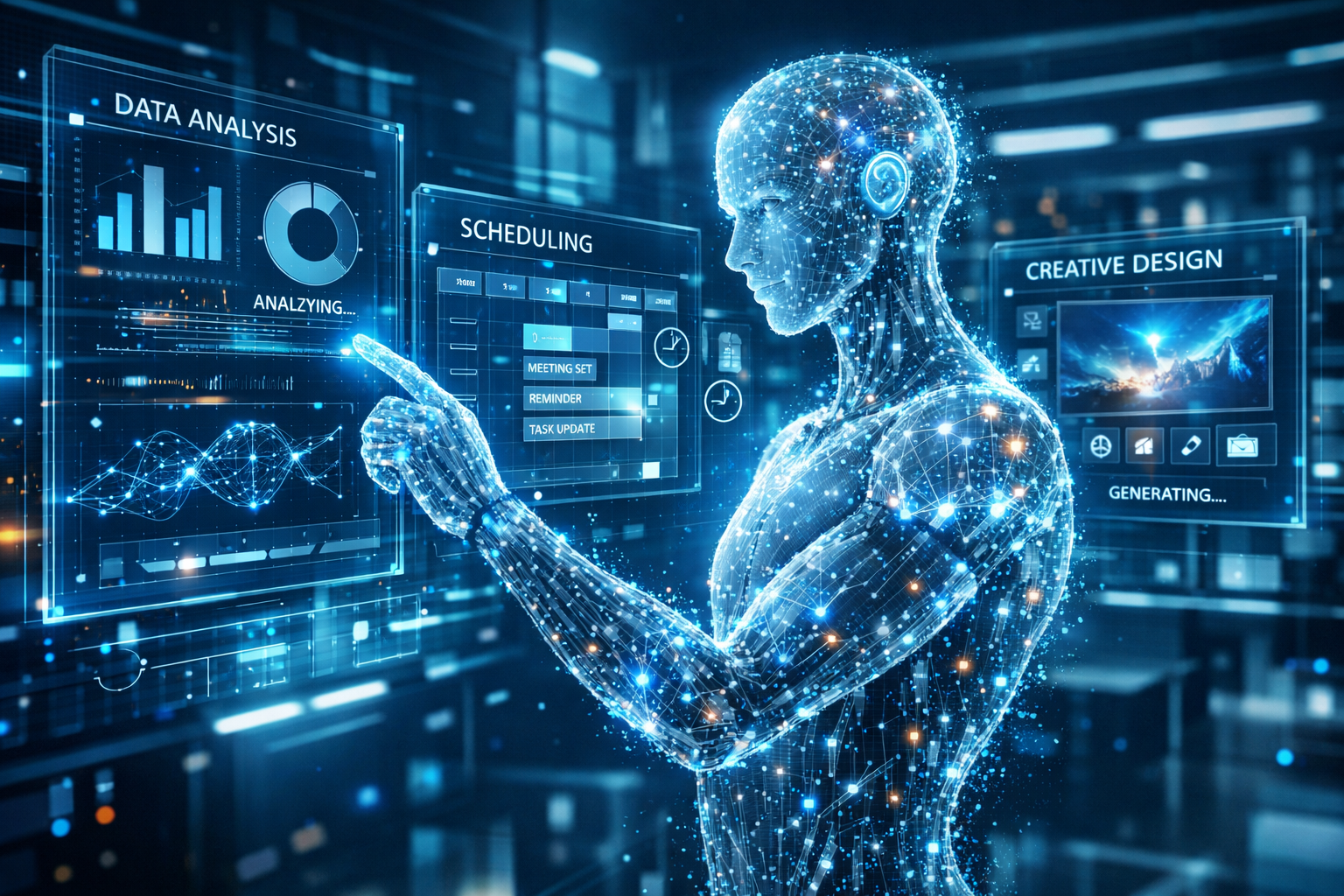
The great turn of the AI Genetics resides in his autonomy. AI agents are software systems capable of perceiving the environment around them, analyzing data, reasoning about a problem, making decisions and acting to achieve a specific goal. They do not wait for each command, but operate proactively, adapting to the circumstances [1].
The Rise of Physical AI and Autonomous Robots in the Real World
The AI is not limited to the digital environment. In 2026, we are witnessing the consolidation of Physical AI, which takes artificial intelligence to the real world through autonomous robots.
Unlike traditional industrial robots that perform repetitive movements in controlled environments, the new Physical AI allows robots to operate in dynamic, unpredictable and complex environments [1].
This capacity is driven by technology VLA (Vision-Language-Action).
The VLA allows a robot to "see" (computer vision), "understand" the context (natural language processing) and "know how to act" (movement control and manipulation) to solve problems in the physical world.
All of this is processed locally on the device, reducing cloud dependency for critical decisions and ensuring quick responses [1].
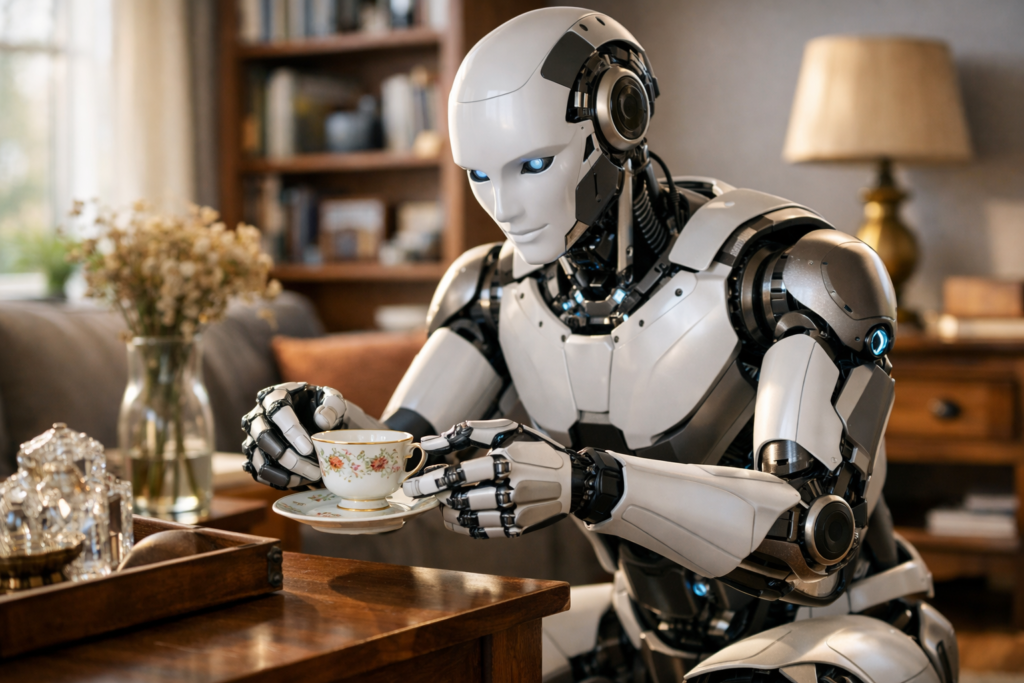
The Humanoid robots, which once looked like science fiction, are becoming a practical reality. Its shape is an infrastructure strategy: the world is designed for humans, with stairs, doors and door handles.
Creating robots that can navigate and interact with this environment autonomously is more efficient than redesigning the entire infrastructure.
Impact and Implications of AI Genetics in 2026
The AI is prepared to generate a transforming impact in several areas:
- Workflow Automation: AI agents can automate entire workflows, from planning to execution and analysis, releasing humans for more strategic tasks.
- Delegation of Decisions: The ability to make autonomous decisions challenges human responsibility and requires new ethical and regulatory structures.
- Retail & Business: In retail, autonomous agents are redesigning intelligent execution, from data integration to customer interaction. Companies that adapt quickly can capture new revenue channels [2].
- Cybersecurity: Offensive and defensive AI agents are becoming crucial in cybersecurity, with AI not only being a tool, but a new paradigm of power and security [3].
- Labour Market: The mass adoption of the AI Consumer genetics will soon be a reality, and professions as AI Engineer are on the rise, reflecting the demand for experts in this area [4] [5].
The Invisible Future of AI
The 2026 trends point to an increasingly "invisible" AI embedded in workflows and systems, operating autonomously and proactively.
The AI is not a futuristic bet, but a competitive pressure that requires companies and professionals to prepare for a new era of automation and intelligence [6].
Conclusion: A New Age of Human-Machine Collaboration
The AI represents a significant milestone in the evolution of artificial intelligence. By empowering systems to act autonomously and intelligently, it paves the way for unprecedented innovations and for a redefinition of relationships between humans and machines.
In 2026, we are not only watching AI create; we are seeing it act, learn and transform the world around us. The era of "digital colleagues" arrived, and with it, a future full of possibilities and challenges to be explored.
Our References
[1] Tech for Humans. "See AI trends for 2026." Article. Available in: https://blog.techforhumans.com.br/post/tendencias-ia-2026. Access: 11 Jan. 2026.
[2] Middle and Message. "From promise to execution: how AI and agents are redesigning retail." Article. Available in: https://www.mioessage.com.br/nrf/da-promise-a-execution-as-a-ia-e-o-agents-are-drawing-the-varying. Access: 11 Jan. 2026.
[3] Welivesecurity. "Trends in cybersecurity for 2026: Offensive AI, the return of ransomware and the new regulatory era." Article. Available in: https://www.welivesecurity.com/en/security-digital/security-for-2026-ia-offensive-o-return-of-ransomware-e-a-new-era-regulation/. Access: 11 Jan. 2026.
[4] IT Inside. "Agentic AIA: a new era of intelligent assistants that will revolutionize the labor market." Article. Available in: https://tiinside.com.br/04/11/2025/ia-agentica-a-nova-era-assistance-intelligent-that-will-revolution-the-market-work/. Access: 11 Jan. 2026.
[5] CNN Brazil. "Trends for 2026: See ranking of the fastest growing professions in Brazil". Article. Available in: https://www.cnnbrasil.com.br/economy/macroeconomics/tendencias-para-2026-veja-ranking-de-profissores-quer-increase-no-brasil/. Access: 11 Jan. 2026.
[6] Nocode Startup. "AI Agent Trends to 2026: Strategic Screenplay." Article. Available at: https://nocodestartup.io/entendencias-de-ia-para-2026/. Access: 11 Jan. 2026.