
Quantum Computers Are Real Now. See How It Changes all
Quantum computers They're no longer promises. By 2026, companies like IBM, Google, and IonQ already sell commercial access to machines that work completely differently from conventional computers. The revolution has begun.
One quantum computer can solve in minutes problems that would lead 10,000 years on a traditional PC. That's not exaggeration: it's pure math. You still don't feel that way day by day, but your banks, hospitals and government are already getting ready.
This article shows exactly what quantum computers are, what real problems they solve now and when you will notice this change in practice. No complicated jargon.
What Is A Quantum Computer? Explained in Truth
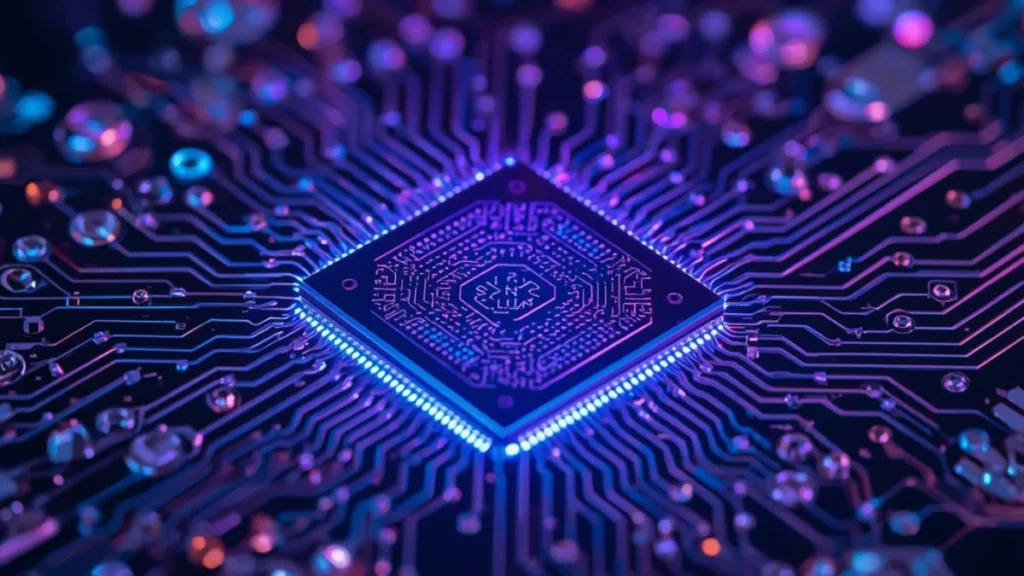
Quantum Computers Come On the Market: How It Affects You
Your PC uses bits: zeroes and ones. Everything you do (games, social networks, videos) is a giant combination of these two options. It's like a switch: on or off.
Quantum computers use qubits. A qubit can be zero, one, or both at the same time. It's called superposition. Imagine a switch that is switched on and off simultaneously until you look at it.
Because of this, a quantum computer with 300 qubits can process more simultaneous combinations that exist in atoms. universe. That's why they're so powerful for specific problems.
But there's a catch: qubits are extremely fragile. Any vibration, temperature or interference destroys the calculation. It's like trying to balance a coin standing during an earthquake.
How They Different From Normal Computers
Your computer thinks of sequential steps: step 1, then step 2, then step 3. It's fast, but linear. A quantum computer tests thousands of paths in parallel, all at once.
This is revolutionary for certain kinds of problems, but totally useless for others. You're not playing Fortnite on a quantum computer. But to discover new molecules of medicines? Perfect.
3 Real Problems Quantum Computers Solve Now in 2026
The theory is interesting, but what matters is: what changes in practice? ? Here are three cases that are already happening now:
1. Encryption and Data Security
Your bank details, passwords and private conversations are protected by encryption. Today's computers take hundreds of years to break those codes. A quantum computer would break in hours.
So banks and governments are adopting the post-quantum encryption in 2026. Have your banks changed their systems yet? Probably. You don't see it, but it's happening backstage.
Empresas como IBM and Google - Business consultants They're testing quantum computers just to prepare stronger defenses. It's a race: the good ones trying to protect, the bad ones trying to attack.
2. Development of Medicines
Discovering a new medicine takes on average 10 to 15 years And it costs billions. Quantum computers simulate how molecules interact at impossible speed for traditional machines.
In 2026, laboratories like Merck and Roche already use quantum computers to test compounds for cancer, diabetes and Alzheimer's. This could reduce discovery time to 2 to 3 years.
You won't notice this immediately, but drugs developed with quantum help can reach pharmacies in 2028 or 2029. It's a silent but gigantic change.
3. Artificial Intelligence (IA) More Powerful
ChatGPT, Gemini and other AI models need to process absurd amounts of data. Quantum computers can train AI models exponentially faster.
A Google - Business consultants announced in 2024 a quantum chip named Willow. In tests, it solved physics problems that no traditional machine could ever manage. By 2026, this is already being applied to smarter AIs.
It means future AI assistants will be faster, more accurate and need less data to learn. You will notice this in 2027 or 2028, when the AIs are visibly better.
When Will You Really Feel This Change?
Here's the honest truth: It's not tomorrow.. Quantum computers won't replace your laptop or cell phone. They specialize in very specific tasks.
But you will feel the effects indirectly:
- New medicines getting faster to pharmacies
- Your financial data get safer
- Smartest IAs on your apps
- Precise weather simulations
- New materials for solar batteries and solar panels
- Optimizations in logistics and urban transport
These effects begin to appear between 2026 and 2028. It is not an explosion, but a wave of gradual changes that you will notice mainly in sectors such as health, safety and consumer technology.
"A quantum computer with 1,000 logically fixed qubits can solve in minutes problems that would take 10,000 years in a traditional supercomputer." — IBM 2025 Search
Who's Using Quantum Computers Now?
You imagine only tech giants have access. Wrong. In 2026, there are three access models:
1. Access in Cloud: IBM offers Internet access to real quantum computers. Anyone (or startup) can use paying for processing time. It's like AWS, but for quantum.
2. Own Hardware: IonQ, Rigetti and others sell quantum computers to large companies. It costs between $5 million and $15 million, but it's accessible to banks, pharmaceuticals and universities.
3. Simulators: Startups and researchers use quantum simulators (classical computers that simulate quantum behavior) to test code at no high cost. That encourages innovation.
The result? By 2026, more than 500 companies are already experimenting with quantum computers to optimize internal processes. You just don't hear about it because it's not front-page news.
The Challenges That Still Exist
Despite the hype, quantum computers still face huge problems. The biggest of them: bug correction. Qubits make mistakes all the time. For each useful qubit, you need 1,000 qubits of "protection".
This means that today's quantum machines are gigantic, expensive, and can make few useful calculations before they fail. A Google - Business consultants has hundreds of people working just on making qubits more reliable.
Another challenge: temperature. Most quantum computers work only at -273°C (absolute zero). This requires super expensive special equipment. Researchers seek qubits that work at higher temperatures.
Quantum computers are estimated truly useful for everyone It'll take five to ten years. But those developed for specific tasks? These are already here.
Preparing Your Business For the Quantum Age
If you run a company or work in tech, it's time to think about preparation. Quantum computers won't suddenly appear. But the change will be quick when it starts.
Step one: understand your problems. Does your business have complex optimization tasks? Encryption? Simulations? If so, quantum computers can help.
Step two: learn. Online courses on quantum programming (using Python!) are proliferating. MIT, Stanford and large universities offer free courses.
Step three: experiment. Use quantum simulators (Qiskit from IBM is free) to test ideas. When ready, access real machines via cloud for affordable prices.
The Future: Next 5 Years
Experts agree on an approximate roadmap:
- 2026-2027: Quantum computers solve first real problems in cryptography and molecular simulation
- 2027-2028: Drugs developed with quantum help begin clinical trials
- 2028-2029: IAs trained with quantum optimization show performance jumps
- 2029-2030: First hybrid quantum computers (classic + quantum) have become business standard
- 2030+: Quantum computers can solve real-time global optimization problems
That's not fiction. Companies like IBM, Google - Business consultants, Microsoft and Amazon They already publish public progress reports. Everything is documented.
Frequently Asked Questions About Quantum Computers
P: Quantum computers will destroy the Internet?
A: No. But they're gonna force encryption changes. This is why governments and companies already adopt post-quantum standards in 2026. The transition is happening before the problem arrives.
P: Can I buy a personal quantum computer?
R: Not in 2026. The minimum is to access via cloud (IBM offers) or work in a company with its own computer. For personal use, it lacks at least 10 years of technological progress.
P: What language programming should I learn?
A: Python is the default. IBM uses Qiskit (Python), Google uses Cirq (Python), Microsoft uses Q# (more complex). Start with Python and Qiskit. It's free and online.
P: Will my work disappear with quantum computers?
R: Probably not. Quantum computers will create more jobs in preparation, maintenance and optimization than they will destroy. But learning about technology now is smart.
Conclusion: The Future Started
Quantum computers are no longer fiction. By 2026, they are already solving real problems in medicine, encryption and artificial intelligence. You may not use one directly, but You'll feel the effects In faster drugs, safer data and smarter AI.
You want to get ready? Start small: read about technology, try online quantum simulators, and follow companies like IBM, Google, and IonQ. The future does not wait, and anyone who understands quantum will now have a competitive advantage in the coming years.
Explore now: Visit IBM Quantum to access real quantum computers via cloud. It's free to start. Quantum revolution already started — The question is, do you want to be a part of it?