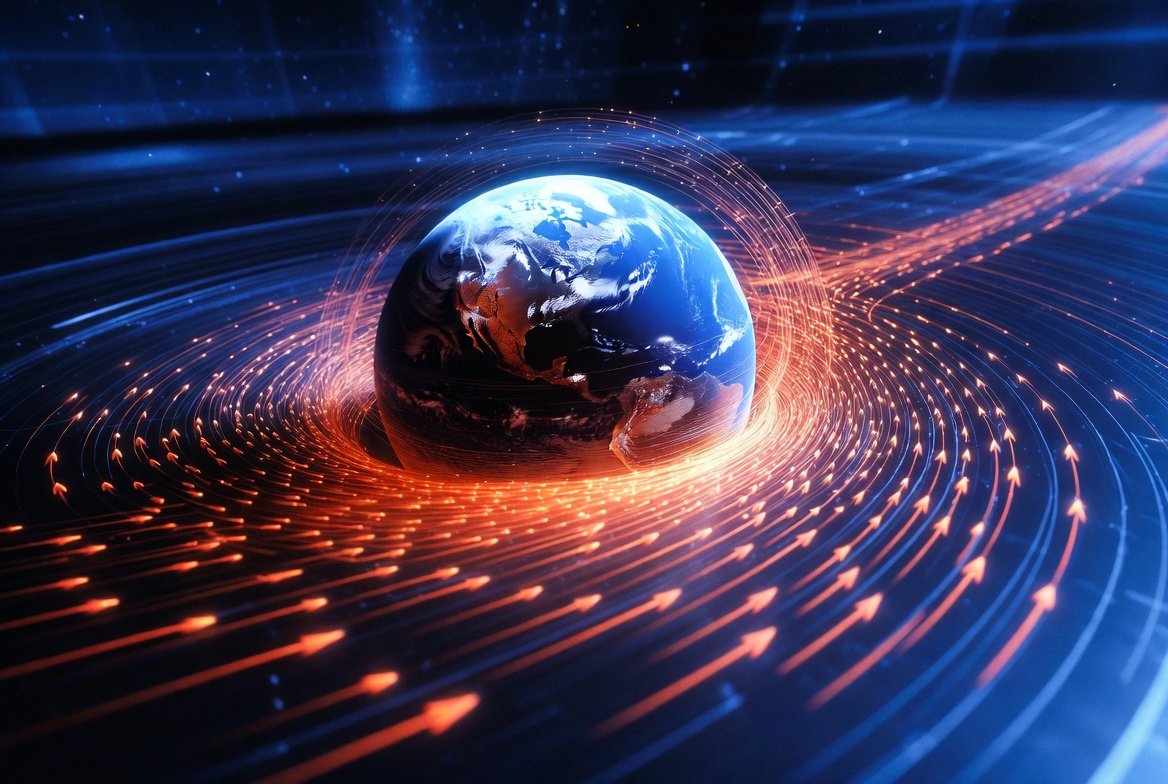
When you look at a picture of Earth from space, you see a perfect blue sphere. But this image hides a fascinating truth about our planet.
A Earth shape It's a lot more complex than it looks. This complexity is not just scientific curiosity – it directly interferes with the functioning of your GPS and the maps you use.
Why Earth Is Not A Perfect Sphere
Our planet constantly revolves around its own axis. This rotation creates a centrifugal force that pushes the earth's mass out.
The result? A Earth is slightly flattened in the poles and wider in the equator. The difference may seem small, but it's about 20 miles of flattening.
Mountains, oceans and variations in the density of the underground make everything even more complicated. Each region has its own local gravitational force.
The two models that explain our planet
To deal with this complexity, scientists have created two different models. Each has its specific function in the geodesia.
These models work together to ensure the accuracy of modern navigation systems. Without them, your GPS would have hundreds of meters of error.
Ellipsoid: the simplified mathematical version
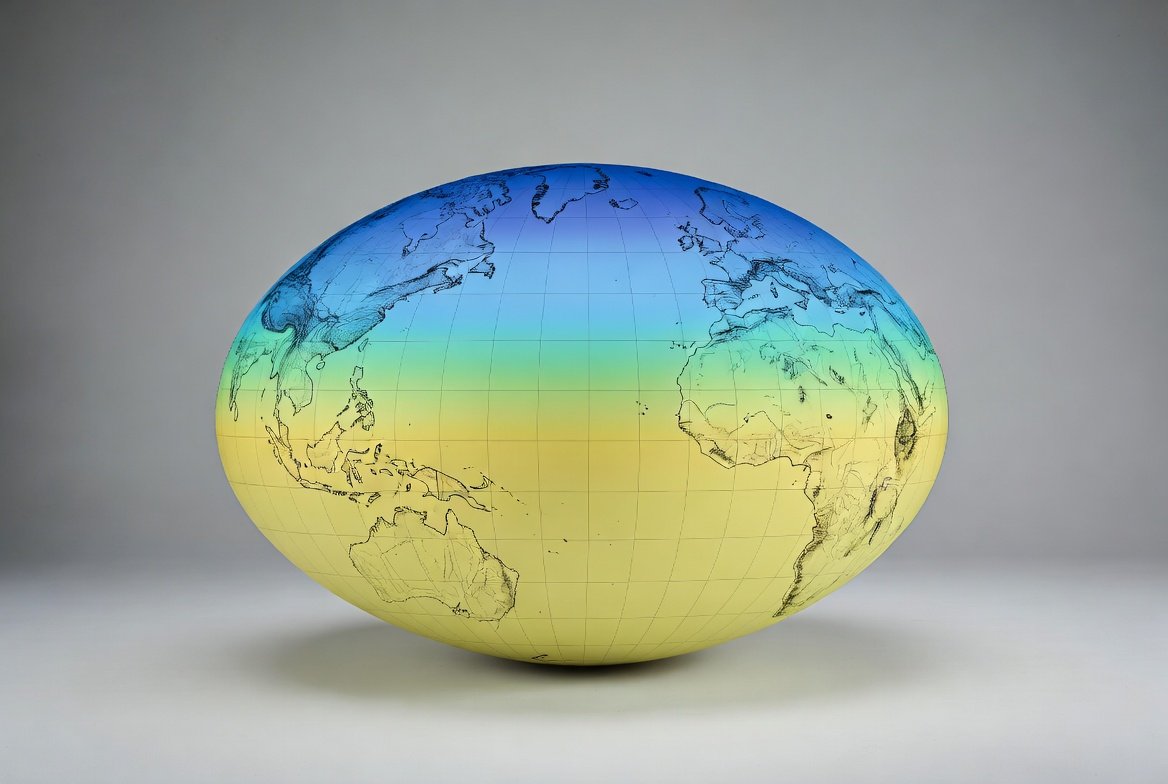
O Earth ellipsoid It's like a giant football. A regular geometric surface, no mountains or valleys.
This mathematical approach ignores the irregularities of the terrain. It serves as a basis of calculation for global positioning systems.
When your navigation app shows altitude, it's measuring the distance to this imaginary surface. It's a standardized world reference.
Different countries use slightly different ellipsoids. But modern systems can convert between these references automatically.
Geoid: reality with all imperfections
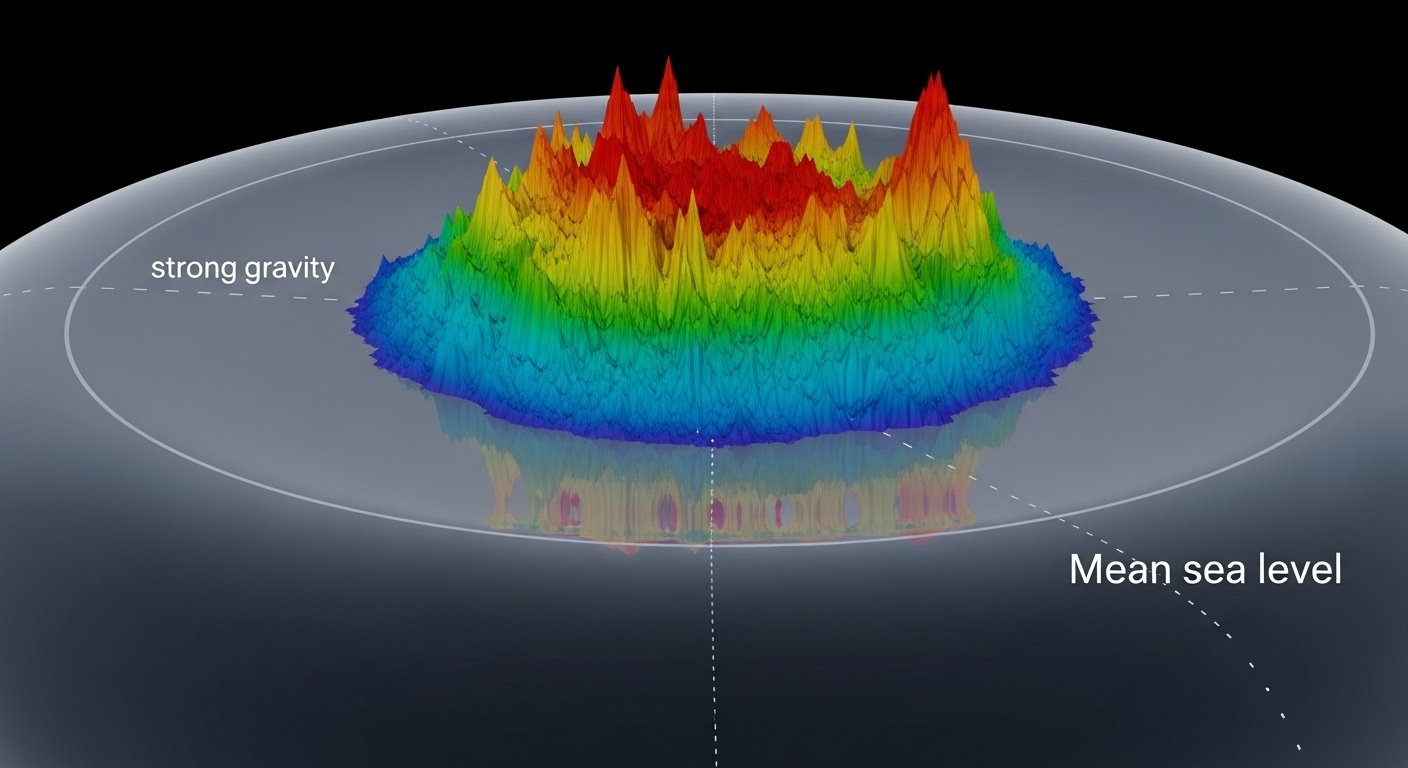
Now let's go to the real world. O geoid considers the gravitational variations caused by mountains, oceans and different densities of the subsoil.
Imagine the sea level stretching beneath all continents. That's the basic idea of geoid.
If you could visualize it, you'd see an irregular surface. Some regions are higher, others lower than the reference ellipsoid.
Differences can reach 100 meters between the two models. This variation is crucial for accurate real altitude measurements.
How these models affect your daily life
Every time you use a map application, you're benefiting from these scientific concepts. The accuracy of its location depends on this complex mathematics.
Engineers who build bridges, tunnels and skyscrapers need these models. A calculation error can cause serious structural problems.
Commercial aircraft pilots use systems that consider these variations. Flight routes are planned taking into account the true terrestrial form.
Even modern farmers depend on that precision. Independent tractors use High precision GPS based on these models.
Space technology revolutionizes our knowledge
Specialized satellites such as GOCE (Gravity field and steady-state Ocean Circulation Explorer) mapped the Earth's gravitational field with incredible details.
These missions revealed nuances of the terrestrial form that were impossible to measure from the ground. Each new discovery improves the accuracy of our systems.
A Technology It keeps evolving. New satellites and sensors bring ever more accurate data on gravitational variations.
This evolution benefits from mobile applications to complex space missions. Precision is constantly improving.
Fascinating Data on Earthform
Earth's polar flattening is about 0.3% of the equatorial radius. It doesn't seem much, but it makes all the difference in the calculations.
The highest point of the geoid is in the Indian Ocean region, about 85 metres above the reference ellipsoid.
The lowest region is in southern India, approximately 106 meters below the reference ellipsoidal surface.
These variations reflect differences in rock density and deep geological structure of the planet.
Practical applications of terrestrial models
Cartographers use these concepts to create accurate maps. Each map has a specific projection based on geodetic models.
Oil companies rely on that precision to locate underground reserves. A few meters of error can mean millions in costs.
Emergency services need exact coordinates. In critical situations, a few meters apart can save lives.
Climate researchers use this data to monitor ocean level changes with millimetric accuracy.
What's ahead
Geodesic science keeps going. New satellites promise even greater resolution in measuring the gravitational field.
Future positioning systems will have centimetric accuracy for civil use. That will open up possibilities. technology Unimaginable today.
Self-employed cars will benefit enormously from this evolution. Precise navigation is essential for the safety of these vehicles.
Space exploration is increasingly dependent on this precision. Missions to other planets use the techniques developed to map the Earth.
Next time you use your GPS, remember: behind that simple location on the screen there is a Science sophisticated that takes into account every irregularity of our fascinating planet.