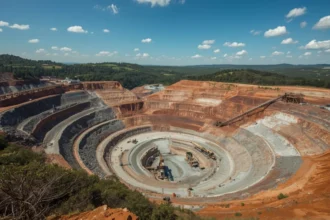

Recently, NASA scientists made an impressive discovery in Mar, which can change our understanding of the Red planet.
The Perseverance robot found a variety of rocks that were nicknamed "golden mine", bringing up clues about the ancient history of Mars. Prepare for a fascinating journey through discoveries that can rewrite science books!
A Revolutionary Mission on Mars
Since December, Perseverance has explored the edge of the crater Jezero, a region that in the past may have housed a lake. The current focus of the mission is a hillside called Witch Hazel Hill, where soil layers can reveal details of a very different Martian climate than we know today.
In recent months, the robot has collected samples of five rocks and analyzed seven with its advanced instruments. He also used his laser at 83 other points for further study.
According to NASAThis is the most productive period of the mission since Perseverance landed on Mars four years ago.
News Every Curve
Katie Morgan, one of the scientists on the project, commented that in earlier phases of the mission, it took months to find a rock that really was different from the others. However, at the edge of the crater, each robot curve brings surprising news.
The western region of the crater stood out for containing fragments of rocks that have already been melted, possibly thrown to the surface by meteor impacts for billions of years.
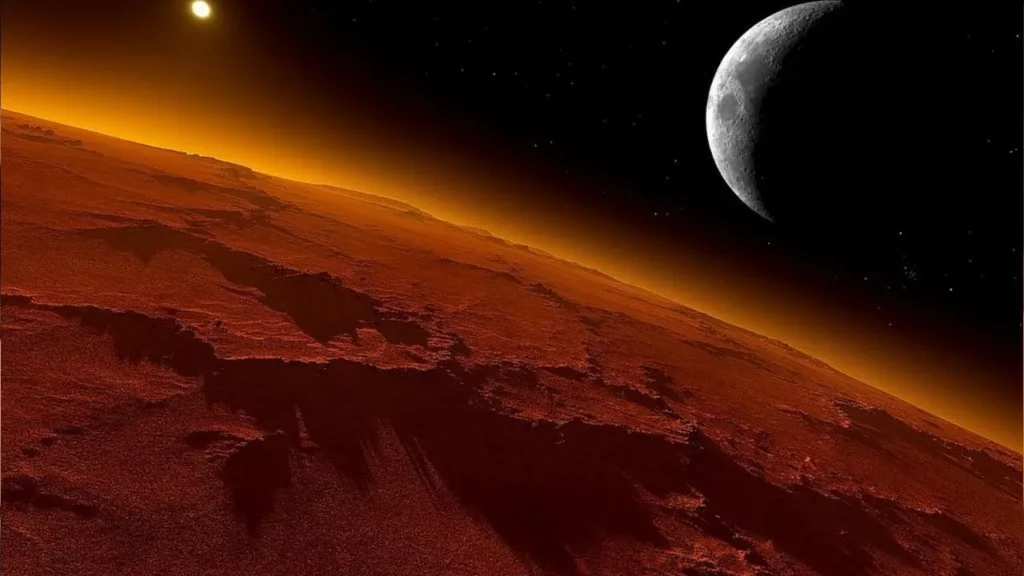
Among the most notable discoveries is a sample collected, called Silver Mountain. This sample, over 3.9 billion years old, is considered a "single treasure" of the Noachian era, when Mars went through an intense bombing that shaped its surface.
Morgan also mentioned the discovery of a serpentinite-rich rock, a mineral that arises when water comes into contact with volcanic rocks, which can generate hydrogen — a possible source of energy for life forms.
The Long Journey of Samples
NASA's expectation is to bring these samples back to Earth, but the mission faces financial challenges, with the costs of the Mars Sample Return project already exceeding 11 billion dollars.
The forecast for returning samples was postponed to at least 2040. In response, NASA is reformulating its plan and seeking proposals from companies and universities to speed up the return.
New Signs of the Past of Mars
In addition to Perseverance, the Curiosity robot is also making fascinating discoveries. Recently, he found a mineral called siderite in abundance in perforated rocks in the Gale crater. This discovery provides new evidence that Mars has already had a hot and humid past, with bodies of water that could have harbored life.
The siderite mineral, an iron carbonate, suggests that Mars had an atmosphere rich in carbon dioxide, which would have allowed the warming of the planet and the presence of liquid water on its surface.
So far, evidence of a dense atmosphere on Mars was scarce, but the samples collected by Curiosity, which contain up to 10.5% siderite, are an important step towards understanding the planet's climate evolution.
A Habitable Past?
The characteristics of the Martian landscape indicate that liquid water has already flowed through the surface of Mars. Many scientists believe that in a distant past, Mars could have been a habitat for microbial life. Carbon dioxide is a greenhouse gas that regulates the climate, and its presence in the Martian atmosphere could have been fundamental to sustain life.
Benjamin Tutolo, a geochemist at Calgary University, points out that the discovery of large carbon deposits on Mars is an important clue to understand what happened to the planet's atmosphere.
The study reveals that while the Martian atmosphere became thinner over time, carbon dioxide was hijacked in the rocks, creating an unbalanced carbon cycle that should be reviewed in the climate evolution models.
What can we expect?
The discoveries of Perseverance and Curiosity offer valuable insights into the history of Mars and its potential for sheltering life. As scientists analyze the collected samples and data, the expectation is that each new discovery will bring us even closer to the truth about the past of our planetary neighbor.
The journey to understand Mars is far from over. What else do these missions have to reveal? Human curiosity continues to push us to look at the stars, seeking answers to the deepest questions about life and the universe.
What do you think of these amazing discoveries about Mars? Share your opinion in the comments and don't forget to share this article with friends who are also space fans!
References: IG portal