
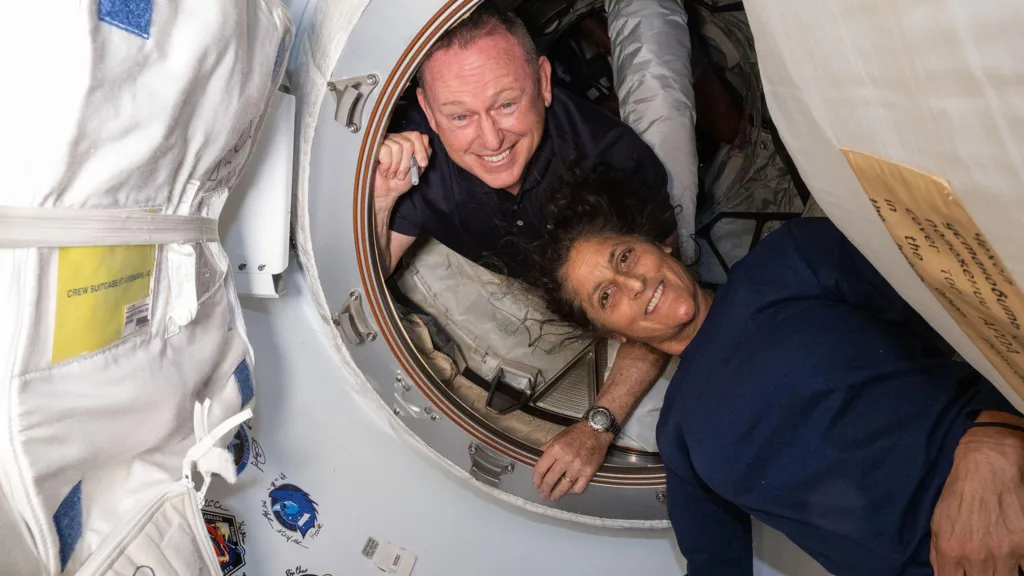
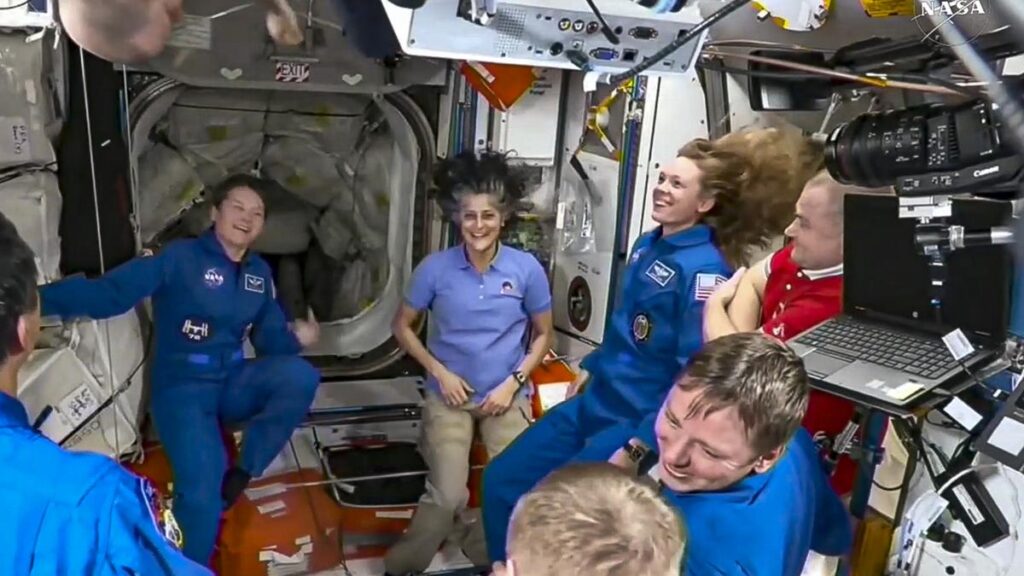
The recent mission of astronauts Butch Wilmore and Suni Williams, who spent impressive nine months at the International Space Station (ISS), brought to light a series of curiosities about life in space, the challenges faced and the science behind this unique experience. In this article, we will explore the details of this mission, the effects of microgravity on the human body and curiosities on prolonged stays in space.
The Space Journey
NASA astronauts, Butch Wilmore and Suni Williams, embarked on a mission that should last only eight days, but due to technical complications, they remained in the ISS for 280 days. The return to Earth occurred at dawn on March 18, 2025, aboard a SpaceX capsule, after a rescue operation involving several challenges.
Technical and Rescue Problems (H3)
The mission began on 5 June 2024, with the initial aim of carrying out a test flight from the Starliner ship, developed by Boeing. However, problems with the propulsion system delayed the return of the team. To solve the situation, NASA decided to send a rescue mission with SpaceX, which faced delays, including a failure in the launch platform's hydraulic system.
Life in the ISS
During their long stay at ISS, Wilmore and Williams dedicated themselves to a variety of scientific experiments and maintenance tasks. Suni Williams, in particular, highlighted that it accumulated 62 hours in space walks, setting a new record among female astronauts.
How Astronauts Keep Health
Despite the challenges, the astronauts managed to maintain their health physical and mental. They followed a structured routine, including daily exercises on the mat and the endurance machine, to preserve bone and muscle strength. In addition, they kept in touch with their families through emails and phone calls, which helped alleviate their nostalgia.
The Effects of Microgravity in the Body
The prolonged stay in space brings a number of adverse effects to the human body. The astronauts may suffer from:
- Bone demineralization: Loss of bone density from 1% to 1.5% per month.
- Muscle atrophy: Decreasing muscle mass due to lack of gravity.
- Changes in vision: Eye pressure that can lead to neuro-ocular syndrome associated with space flight.
These effects, however, are monitored and treated with regular physical exercises and nutritional supplements.
Curiosities about Prolonged Missions
Wilmore and Williams are not the first to spend long periods in space. Other notable missions include:
- Frank Rubio: 371 days at the ISS.
- Mark Vande Hei: 355 days.
- Scott Kelly: 340 days.
The world record is of the cosmonaut Valeri Polyakov, who spent 437 days at the Russian station Mir.
The Human Experience in Space
The experience of living in space is unique and challenging. The astronauts face not only physical challenges, but also emotional issues. Psychological intervention is a fundamental part of the training and support provided during the mission.
Butch Wilmore and Suni Williams' mission exemplifies the challenges and wonders of space exploration. As technology advances and new missions are planned, understanding of the effects of space on the human body becomes more and more important. The safe return of astronauts to Earth is not only a victory for them, but a significant step towards future space exploration.
If you want to delve deeper into the theme of space exploration and the challenges faced by the astronauts, follow our blog and stay inside the latest news! Share this article with friends and family interested in science and technology!
Related Links