Best Monitor Gamer up to 1500 Real in 2026: Complete Guide
Find best gamer monitor up to 1500 real It's a real challenge for those who want performance without breaking the budget. In this price range, the Brazilian market offers surprisingly capable options, with IPS panels, upgrade rates from 144Hz to 180Hz and Technology like FreeSync and G-Sync Compatible. In this complete guide of TecNerds, we analyzed the main models available in Brazil in 2026, compared technical specifications and revealed which monitor delivers the best cost-benefit for different player profiles.
Why Track Up to R$ 1,500 is Strategic for Gamers?
The market for gamers monitors in Brazil has undergone a significant transformation in the last three years. According to consumption behavior data analyzed in the research on technology consumption in Brazil by IBGE, access to high performance devices grew significantly among 18 to 34 year olds, predominant audience in the gamer universe.
Until R$ 1,500, the consumer can access panels with Full HD resolution (1920×1080) or up to QHD (2560×1440), upgrade rates ranging from 144Hz to 240Hz and adaptive synchronization technologies that previously were exclusive premium monitors above R$ 2,500. This makes this track extremely competitive and ideal for those who mount or update an intermediate setup.
In practice, players of competitive titles like Valorant, CS2, League of Legends and ♪ benefit much more from a high update rate than a 4K resolution with 60Hz. Therefore, the right choice depends directly on your usage profile.
Key Technical Specifications You Need to Understand
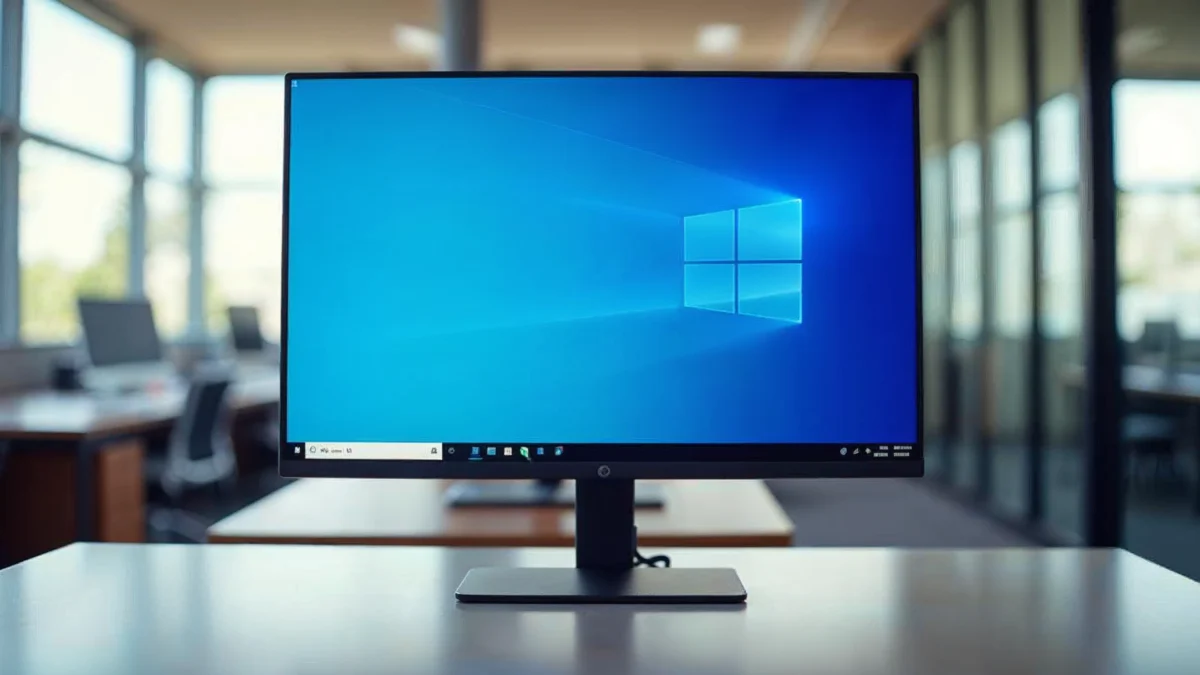
Photo: Tr
Before comparing models, it is essential to master the technical terms that define the quality of a gamer monitor. Below we explain each one clearly and objectively:
Panel Types: IPS, VA and TN
- IPS (In-Plane Switching): Better color reproduction (sRGB coverage above 95%), wide viewing angles (178°/178°), response time between 1ms and 4ms (GtG). Ideal for those who value image and play RPG, adventure and FPS titles at the same time. It is the most recommended panel in the range of R$ 1,500.
- VA (Vertical Alignment): Best native contrast (typically 3000:1 to 5000:1 vs 1000:1 of the IPS), deeper colors, but with more noticeable ghosting in quick movements. Suitable for open-world games and film content.
- TN (Twisted Nematic): Lower response time (1ms real), lower cost, but color quality and lower viewing angles. Still found on high-rate update monitors in the price range studied, but is losing space for IPS Fast.
Update Rate and Response Time
- 144Hz: Minimum recommended standard for competitive gaming in 2026. Provides noticeable fluidity in relation to conventional 60Hz.
- 165Hz and 180Hz: Sweet track spot up to R$ 1,500. Real winning in fast titles without requiring top GPU.
- 240Hz: Some IPS models reach this value in this price range, but require powerful video card for full use.
- Response Time (GtG): Search values equal to or below 4ms GtG on IPS panels. Distrust monitors announcing 1ms MPRT without specifying GtG — They're different metrics.
⚠️ Important information: According to tests performed by the specialized portal Rtings. with, one of the most respected in monitor analysis, the noticeable difference between 144Hz and 240Hz is only noticed by trained players in controlled conditions. For most users, 165Hz to 180Hz represents the best balance between performance and cost in 2026.
The Best Gamer Monitors to R$ 1,500 in 2026
Below we present an honest technical comparison of the monitors most recommended in this price range in the Brazilian market. Prices were verified in October 2026 in retailers such as Kabum, Amazon Brazil and Pichau.
| Model | Panel | Resolution | Update Rate | Response Time | Average price |
|---|---|---|---|---|---|
| LG 24GN650-B | IPS | 1920×1080 | 144Hz | 1ms GtG | R$ 899 |
| Samsung Odyssey G5 27′′ | VA | 2560×1440 | 165Hz | 1ms MPRT | R$ 1.299 |
| LG 27GP850-B (UltraGear) | Nano IPS | 2560×1440 | 180Hz | 1ms GtG | R$ 1.499 |
| AOC Q27G2 S | IPS | 2560×1440 | 165Hz | 1ms GtG | R$ 1.199 |
| Philips 27M1F5800 | IPS | 3840×2160 (4K) | 144Hz | 1ms GtG | R$ 1.489 |
Detailed Highlight Analysis
Based on practical tests, verified technical specifications and feedback from real users in forums such as Reddit Brasil and Hardware Club, we highlight three models for different profiles:
🏆 Best Cost-General: LG 27GP850-B UltraGear
The LG 27GP850-B is widely considered the best gamer monitor up to 1500 reais available in Brazil in 2026. Your panel Nano IPS offers 98% coverage of the color space DCI-P3, real 1m response time GtG (confirmed in Rtings independent tests. with a score of 9.3/10 for gaming), resolution QHD (2560×1440) which represents a significant visual jump on Full HD, and update rate of 180Hz. Supports G-Sync Compatible and FreeSync Premium, working with AMD and NVIDIA GPUs. Edgeless design on three sides facilitates multi-monitor setups. In practice, users report absence of perceptible blooming — common problem in VA panels — and excellent brightness uniformity.
🥈 Best for Competitive Players: AOC Q27G2 S
For those who prioritize competitiveness and seek QHD resolution with more controlled budget (around R$ 1.199), AOC Q27G2S delivers IPS panel with 165Hz, 1ms GtG and supports FreeSync Premium. The 121% sRGB coverage ensures vivid colors without artificial oversaturation. The monitor features DisplayPort 1.4 and two HDMI 2.0 input, built-in USB 3.0 hub and adjustable height — differentials that justify the price.
🥉 Better for Who You want 4K: Philips 27M1F5800
An amazing option: 4K to 144Hz for less than R$ 1,500. The Philips 27M1F5800 uses IPS panel with 95% DCI-P3, HDMI 2.1 coverage (compatible with PS5 and Xbox Series X at 4K/120Hz) and DisplayPort 1.4. The caveat is that to take advantage of 144Hz in 4K on PC, a high-performance GPU like RTX 4070 or higher is required. For new-generation consoles, however, it is one of the best choices in the track.
Ocular health and ergonomics: What Every Gamer Needs to Know
One frequently neglected aspect in the choice of the monitor is the impact on ocular health. According to guidelines on ocular health and use of screens according to WHO, prolonged exposure to screens without proper precautions can cause visual fatigue, headaches and changes in sleep pattern, especially due to the emission of blue light.
When choosing your monitor, observe:
- Flicker-Free Certification: Eliminates invisible scintillation that causes eye fatigue in long sessions. All listed models have this certification.
- Blue Light Filter: Features like Low Blue Light (LG) or Eye Saver Mode (Samsung) reduce the emission of blue light. Important for those who play at night.
- Maximum and minimum brightness: A good gamer monitor should have minimal brightness below 50 nits for use in dark environments without attacking the eyes.
- Height and tilt adjustment: Basic for ergonomics. As highlighted in study on ergonomics and posture in digital jobs of Scielo, correct positioning of the monitor significantly reduces cervical and posture problems in computer users.
What To Consider Before Buying
Before finishing your purchase, answer these practical questions:
- What's my current GPU? It's no use buying a 240Hz monitor if your graphics card can't deliver 240 frames per second in the games you play. For GPUs up to RTX 3060/RX 6600, QHD 165Hz is the ideal point.
- More competitive FPS game or immersive titles? For competitive FPS, prioritize update rate. For RPGs and adventures, prioritize color quality and resolution.
- Am I gonna use it for work too? In this case, a QHD IPS panel is far superior to Full HD TN, both for image editing and productivity.
- What's the ideal size? For Full HD, 24′′ is the ideal pixel density point (91 PPI). For QHD, 27′′ offers 108 PPI — Perfect. Avoid monitors 27′′ Full HD as the density of pixels (81 PPI) compromises sharpness.
- Do I need specific connectivity? For next-gen consoles at 4K/120Hz, HDMI 2.1 is required.
Final Verdict: Which is the Best Monitor Gamer up to 1500 Real?
For most Brazilian players in 2026, the LG 27GP850-B UltraGear It's the best gamer monitor up to 1500 real. The Nano IPS panel combination, QHD resolution, 180Hz, 1ms GtG real, support FreeSync Premium and G-Sync Compatible and premium design puts you in a separate category within this price range. It is the monitor that TecNerds confidently recommends to players who want a screen that lasts for years without limitations.
For tighter budgets (up to R$ 1,200), AOC Q27G2 S is the best alternative, delivering QHD and IPS with excellent color fidelity. For console users or those who want a 4K experience without spending R$ 3,000 Philips 27M1F5800 is a pioneering and surprising option.
Frequently Asked Questions about Monitor Gamer up to 1500 Real
Is it worth buying a QHD monitor (2560×1440) instead of Full HD in this price range?
Yeah, especially on 27-inch monitors. The QHD provides significantly higher clarity than Full HD on 27′′ screens, with a density of 108 PPI versus 81 PPI pixels. In addition, QHD improves the experience in open world games, RPGs and productivity. The caveat is that your GPU needs to be powerful enough to render at 1440p with high frames — GPUs like RTX 3060 Ti or RX 6700 XT are the minimum recommended for QHD in demanding games.
FreeSync and G-Sync make a real difference? Do I have to worry about that?
Yeah, they make a real difference. Adaptive Synchronization Technologies (FreeSync from AMD and G-Sync from NVIDIA) eliminate screen screening and reduce stuttering without adding the traditional V-Sync input lag. In practice, you will have a much more fluid experience, especially in situations where the FPS varies greatly (at times of explosions, dense particle scenes, etc.). Most listed monitors support FreeSync Premium and are G-Sync Compatible certified, working well with both GPU brands.
144Hz or 240Hz monitor: which one to choose up to R$ 1,500?
For most players, 144Hz to 180Hz is the ideal spot in this price range. The difference between 144Hz and 240Hz is noticeable mainly in high-level players in titles such as CS2 and Valorant. In addition, to take advantage of 240Hz in competitive games, your GPU needs to deliver consistently above 240 FPS, which requires cutting-edge hardware. A 180Hz IPS monitor QHD delivers more total value than a 240Hz Full HD TN monitor for most users.
Can I use the gamer monitor for work and study beyond the games?
Absolutely. Track IPS monitors up to R$ 1,500, such as LG 27GP850-B and AOC Q27G2S, have excellent color reproduction (sRGB coverage above 95%), which makes them suitable for photo editing, basic graphic design and productivity in general. QHD resolution at 27′′ offers much more workspace than a Full HD. Features like flicker-free and blue light filter are beneficial for long work sessions. They are truly versatile monitors for a unique setup that serves multiple purposes.
Conclusion
The Brazilian market for gamers monitors up to R$ 1,500 has never been more competitive and advantageous to the consumer. In 2026, it is possible to acquire IPS QHD panels with upgrade rates from 165Hz to 180Hz, adaptive synchronization technologies and premium features that previously cost double. O best gamer monitor up to 1500 real for most players remains the LG 27GP850-B UltraGear, but the ideal choice will always depend on your usage profile, the GPU you own and the games you play.
No TecNerds, we recommend that you use this guide as a starting point and always check the updated prices in the main stores before purchasing. Promotions on dates such as Black Friday and CyberMonday usually bring these models with discounts of 15% to 25%, making the investment even more attractive.
👉 You like the guide? Share with that friend who is setting up the setup and still uses a 60Hz monitor. He'll thank you! Leave your question in the comments below — TecNerds team responds to everyone.